



Introduction
A bank does not assess a property development loan in the same way it assesses an ordinary home loan or a straightforward commercial property investment. A development facility must fund an asset that may not yet exist, rely on a construction program that can change, and be repaid from sales or refinancing that will occur months or years after the initial approval. The bank is therefore lending against a future outcome rather than simply against the value and income of an established property.
That difference explains why development finance applications can feel demanding. The lender is not only checking whether the project appears profitable. It is testing whether the borrower has the experience, equity, liquidity, management capability and risk controls required to deliver the project under less favourable conditions than those shown in the base feasibility. It also needs to establish that the proposed facility will remain fully funded if costs rise, construction is delayed, sales slow or valuations soften.
For developers, the most useful way to understand a bank's credit process is to stop thinking of approval as a single decision. It is a sequence of linked assessments. The bank first decides whether the opportunity fits its appetite. It then assesses the sponsor, project, market, builder, feasibility, security, presales and exit strategy. Specialists may review the valuation, quantity surveyor reports, construction contract, legal structure and environmental risks. Only after those parts align can a formal credit approval be issued.
This guide explains that process in practical terms. It focuses on how Australian banks commonly assess residential and commercial development loans, why some applications move smoothly while others stall, and what developers can do to present a proposal that is easier for a credit team to understand and support. Lending policies vary between banks and change over time, so the figures and examples in this article are illustrative rather than universal lending limits.
Why Banks Treat Development Lending as a Specialist Credit Risk
Property development lending combines several forms of risk in one transaction. There is land and valuation risk at the beginning, planning and approval risk before construction, contractor and cost risk during the build, and sales or leasing risk at completion. Unlike a completed investment property, the security may initially produce little or no income. Its value depends heavily on the developer successfully completing the project and creating a saleable or income-producing asset.
Banks also recognise that development losses can become correlated. When market conditions weaken, sales may slow at the same time that valuations fall and refinancing becomes harder. Construction costs may already have been incurred, leaving the lender with an incomplete asset that is expensive to finish. APRA has repeatedly highlighted commercial property lending as an area requiring strong underwriting, portfolio controls, reliable data and active monitoring because property cycles have historically produced material losses for banks.
For that reason, banks generally operate within defined property lending limits. These limits may apply by geographic region, asset class, project type, borrower category, concentration, loan size, exposure to one developer or exposure to a particular builder. A project can be commercially sound but still fall outside a bank's current appetite because the bank has reached an internal concentration limit or has become cautious about that market segment.
The first question is therefore not simply whether the project is good. It is whether the project is good for that bank at that time. A well-prepared funding strategy identifies this early, before the developer invests weeks responding to questions from a lender that was unlikely to proceed.
“A lender funds the exit, not the dream.”
— The Australian Property Development Handbook
Stage One: The Initial Appetite and Policy Screen
The first formal or informal assessment usually occurs before a full application is submitted. A relationship manager or property finance specialist reviews the basic proposal to determine whether it fits the bank's credit policy and sector appetite. This screen may consider the location, project type, total development cost, proposed debt, borrower experience, approval status, construction readiness, presales and intended exit.
At this stage, broad inconsistencies can stop the process quickly. A bank may be uncomfortable with a speculative apartment project in an oversupplied market, an inexperienced sponsor seeking high leverage, a project that still depends on material planning changes, or a highly specialised asset without a credible tenant or purchaser. The lender may also decline because the facility is too small or too large for the team handling the request.
Developers sometimes interpret an early decline as a conclusion that the project cannot be financed. Often it means only that the proposal is outside that lender's policy or current portfolio appetite. However, repeated declines from appropriate lenders usually indicate a more fundamental problem involving leverage, feasibility, approvals, experience, presales, construction risk or exit strategy.
A concise initial funding paper should make the appetite decision easy. It should identify the borrower and guarantors, site, planning status, proposed development, total cost, completed value, required facility, sponsor equity, builder, presales or leases, timing and exit. The objective is not to bury the bank in documents. It is to provide enough reliable information for the lender to decide whether a detailed assessment is worthwhile.
Stage Two: Assessing the Developer and Sponsor Group
A bank lends to a borrower, but it also lends behind the people responsible for delivering the project. Sponsor assessment is therefore central to development finance. The credit team considers who owns and controls the borrower, who is managing the project, who is providing equity, who will give guarantees, and whether those parties have the financial capacity and experience to support the development if the project departs from plan.
Relevant experience is usually assessed by reference to completed projects of similar scale, product, location and complexity. A developer who has delivered several townhouse projects may be considered experienced for another townhouse development but not automatically for a high-rise apartment tower, hotel or large industrial estate. Banks are interested in outcomes, not only project lists. They may ask what was delivered, whether it was completed on time and within budget, how debt was repaid and whether disputes or losses occurred.
The bank also reviews the sponsor's financial position. This commonly includes statements of assets and liabilities, tax returns, company financial statements, trust information, existing debt, contingent liabilities, guarantees and evidence of cash or liquid investments. Net worth is relevant, but liquidity is often more important. A sponsor may own valuable property yet have limited ability to meet a cost overrun or interest shortfall without selling or refinancing assets.
Character and conduct matter as well. The bank may review repayment history, account conduct, previous defaults, court actions, tax arrears, insolvency records and dealings with other lenders. Incomplete disclosure is particularly damaging. A credit team can often work with a disclosed historic issue that has a credible explanation, but confidence falls quickly when liabilities, disputes or prior losses emerge late in the assessment.
First-time developers are not automatically excluded, but they usually need a stronger supporting team and a more conservative structure. The bank may place greater weight on the project manager, builder, development manager, quantity surveyor, selling agent and professional advisers. It may also require more equity, lower leverage, stronger presales or an experienced joint-venture partner.

Stage Three: Understanding the Site, Planning Position and Development Proposal
The bank needs certainty about what can legally and practically be built. It reviews title details, ownership, easements, covenants, zoning, development approvals, conditions, operational works approvals, building approvals and any remaining planning risks. If the borrower does not yet own the site, the acquisition contract, settlement conditions, due-diligence rights and deposit arrangements are also relevant.
A development approval is not always equivalent to a construction-ready project. Conditions may require infrastructure agreements, service upgrades, contributions, environmental work, roadworks, easement changes or further authority approvals. The bank will want to know which conditions must be satisfied before construction and whether the associated costs and timing are fully reflected in the feasibility.
The design itself is assessed for marketability and buildability. The lender may consider unit mix, dwelling sizes, parking, access, floor efficiency, staging, landscaping, amenity, construction methodology and whether the product suits the local buyer or tenant market. A technically approved project can still present credit risk if the product is poorly aligned with demand or is too expensive for the target market.
Site risks can materially affect both cost and program. Contamination, flooding, geotechnical conditions, acid sulfate soils, heritage constraints, demolition, retaining walls, service capacity and difficult access may all require specialist investigation. Banks generally prefer these issues to be identified and priced before approval rather than discovered after the facility is committed.
Talk to BluCow about your project →
Stage Four: Testing the Development Feasibility
The feasibility is the financial model that connects the project to the requested loan. The bank tests whether the stated revenue is supportable, whether all costs are included, whether the timing is realistic and whether the project retains an adequate margin after finance costs and contingencies. It will rarely rely only on the developer's summary figures. The model is compared with the valuation, construction contract, quantity surveyor report, sales evidence, consultant advice and the bank's own assumptions.
Gross realisation value or gross development value represents the expected value of the completed project. For a sell-down development, this is generally the aggregate value of the individual units or lots. For a hold project, the bank may focus on the completed investment value supported by forecast net income and an appropriate capitalisation rate. Revenue assumptions are usually reviewed by an independent valuer, who considers comparable sales, leasing evidence, incentives, absorption and market conditions.
Total development cost should include more than land and construction. It ordinarily captures acquisition costs, stamp duty, professional fees, authority charges, demolition, civil and building works, fit-out, marketing, selling costs, finance costs, contingencies, taxes where relevant and the cost of satisfying approval conditions. Excluded or underestimated costs are a common reason a lender reduces leverage or requires additional equity.
Banks calculate profit margins in more than one way. Profit on cost compares forecast profit with total development cost, while profit on revenue compares profit with gross revenue. The bank is less concerned with the label than with the buffer available to absorb adverse movement. A project with a thin margin can become unviable after a modest fall in values or increase in costs, even if the headline leverage initially appears conservative.
The credit team normally performs sensitivity analysis. It may reduce selling prices, increase construction costs, extend the project period, delay settlements, increase interest or adjust the exit capitalisation rate. The purpose is not to predict one exact downside scenario. It is to determine how quickly equity and profit are eroded and whether the bank remains repayable if several adverse events occur together.
A strong base feasibility is therefore only the starting point. Banks prefer projects that remain coherent under stress, with enough equity, contingency and liquidity to deal with ordinary development volatility.
Stage Five: Measuring Leverage and Sponsor Equity
Banks commonly assess development leverage using both loan-to-cost and loan-to-value measures. Loan-to-cost compares the debt facility with eligible project costs. Loan-to-value compares debt with the bank-accepted value of the security or completed project. The bank may apply different definitions of debt, cost and value, so a developer should not assume that its own LTC or LVR calculation will match the lender's.
The approved facility may include land debt, construction funding, capitalised interest, fees and contingency. Some costs may be excluded from eligible development cost, while value may be reduced through valuation assumptions, GST treatment, presale adjustments or a conservative adopted gross realisation. The bank generally lends to the lower amount produced by its relevant policy tests, not simply to the developer's preferred percentage of cost.
Sponsor equity must usually be genuine, available and injected at the required time. Equity may include cash already spent on the site, unencumbered land value or approved subordinated capital, but the bank will examine its source and priority. Borrowed equity, related-party loans, deferred land payments and mezzanine finance may be treated differently from permanent sponsor capital.
Many bank structures require equity to be contributed before senior debt is drawn, particularly for construction costs. This ensures the sponsor has meaningful capital at risk and reduces the bank's exposure during the early stages. Other facilities may allow a proportionate funding approach after a defined equity threshold is met. The precise sequence is documented in the facility and quantity surveyor drawdown arrangements.
The bank also considers remaining liquidity after the equity contribution. A developer who uses every available dollar at settlement may satisfy the initial equity requirement but lack the capacity to meet variations, tax liabilities, delays or costs excluded from the facility. Credit teams therefore distinguish between equity committed to the project and liquidity retained outside it.
Stage Six: Valuation and Market Risk
The bank commissions or approves an independent valuation because value is central to both security and repayment. The valuer is instructed by the lender and usually reports to the lender, even though the borrower pays the fee. The report may assess the current site value, value as if complete, gross realisation, individual unit values, rental income, capitalisation rates, selling period, market demand and the project's sensitivity to changes in assumptions.
For residential sell-down projects, the bank examines whether individual prices are supported by comparable evidence and whether the expected sales rate is realistic. It may apply allowances for selling costs, incentives, GST, marketing periods or bulk-sale risk. For commercial projects, the valuation depends heavily on lease terms, tenant quality, incentives, market rent, vacancy, operating costs and the adopted capitalisation rate.
The credit team does not simply accept the headline valuation. It reviews the assumptions, limitations and risks within the report. A valuation may support the requested amount while still raising concerns about untested price points, limited comparable sales, reliance on one tenant, short lease terms, speculative income or a narrow buyer market.
Banks can also adopt a value lower than the valuer's conclusion for credit purposes. This may occur when policy requires a haircut, when the bank disagrees with an assumption, or when conditions have changed since the valuation date. Developers should therefore maintain sufficient headroom rather than structuring the project so tightly that a small valuation reduction creates an immediate funding gap.
“The best submission answers the credit team's questions before they ask them.”
— The Australian Property Development Handbook
Stage Seven: Presales, Preleases and Revenue Certainty
Presales are one of the most visible bank requirements for residential development, but the reason is sometimes misunderstood. Presales do not only demonstrate demand. They can reduce the amount of unsold stock at completion, provide evidence for the valuation and create contracted settlement proceeds that repay debt. The bank assesses both the number and quality of contracts rather than relying solely on the headline dollar value.
Qualifying presales may need to be arm's length, supported by acceptable deposits, unconditional except for completion, and entered into with purchasers considered capable of settling. The bank may scrutinise sunset clauses, finance conditions, deposit bonds, rebates, incentives, related-party purchasers, foreign-buyer exposure and concentration in one purchaser or sales channel. It may also apply a haircut to contracts where the sale price exceeds the valuer's adopted value.
In 2025 APRA clarified that it does not prescribe one universal presale level for commercial property development lending. Banks are expected to apply prudent risk management and determine appropriate requirements within their own credit frameworks. This means presale policy can vary materially by bank, project, sponsor and market conditions rather than being dictated by one fixed regulatory percentage.
For commercial developments, preleases can play a similar role. The lender considers tenant covenant, lease term, rent, incentives, conditions precedent, fit-out obligations, bank guarantees and whether the lease supports the completed valuation and refinance exit. A long lease to a strong tenant can materially improve bankability, while a conditional agreement with an undercapitalised operator may provide limited comfort.
Some projects can be banked with limited presales or preleasing where leverage is low, the sponsor is strong, demand is well established or the exit does not rely on immediate sell-down. However, reduced revenue certainty is usually offset by another strength, such as more equity, additional security, stronger liquidity or a lower-risk asset class.
Stage Eight: Builder, Construction Contract and Delivery Risk
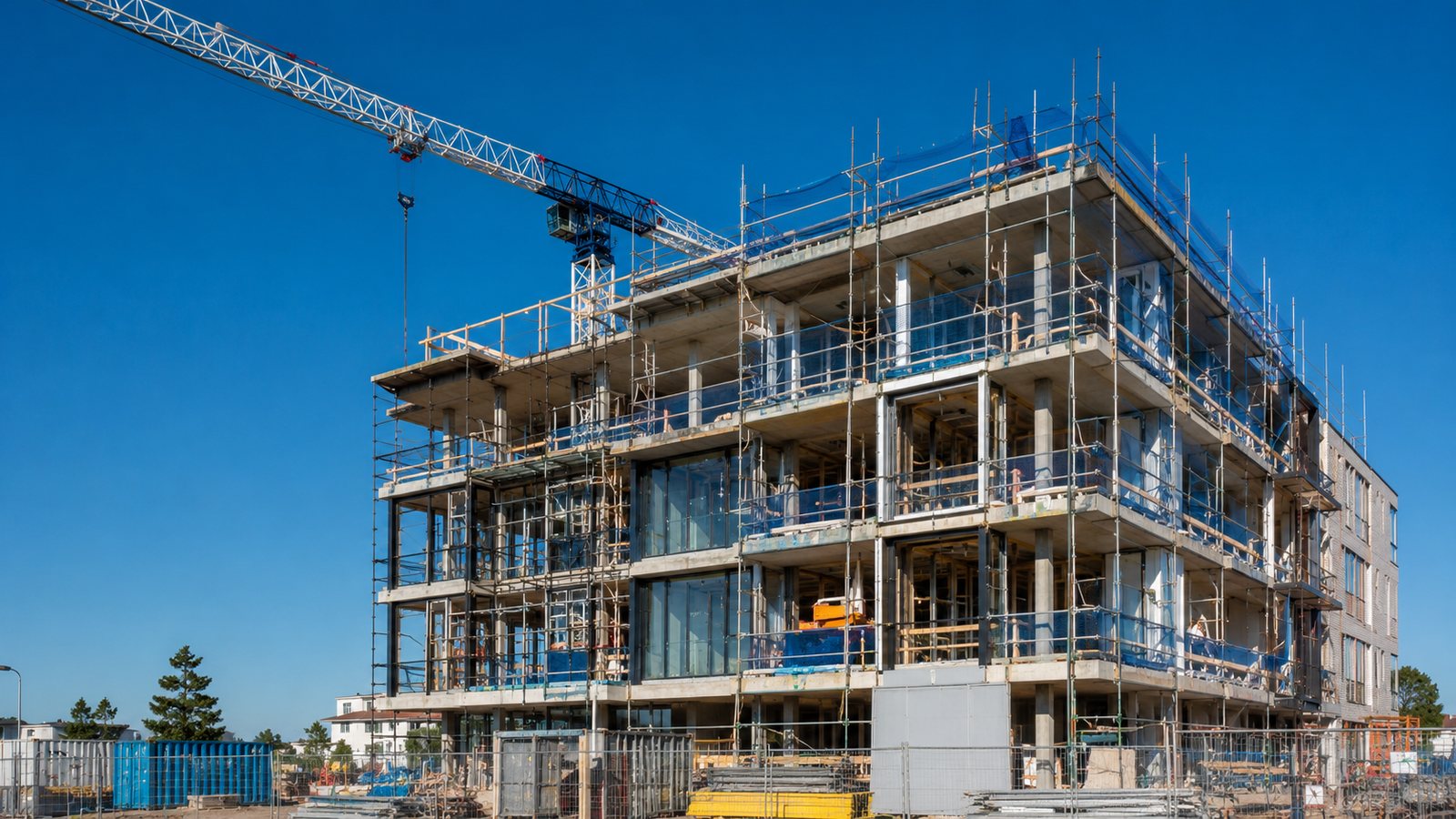
A bank-approved project still depends on the builder delivering the works. Builder assessment therefore goes beyond checking whether the contractor holds a licence. The bank and its quantity surveyor may review the builder's experience, financial capacity, current workload, ownership, key personnel, subcontractor relationships, insurance, disputes and record on similar projects.
A fixed-price, fixed-time design-and-construct contract is often preferred because it allocates more cost and delivery risk to the builder, but the label alone is not sufficient. The lender reviews exclusions, provisional sums, latent-condition clauses, escalation provisions, extensions of time, delay damages, security, retention, variations and termination rights. A contract can be described as fixed price while still leaving the developer exposed to substantial unpriced risk.
The quantity surveyor provides an independent view of construction cost, contract adequacy, contingency, program and progress claims. Before first drawdown, the QS may confirm that the project is fully funded and that the remaining facility plus undrawn equity is sufficient to complete the works. During construction, the QS generally inspects progress and recommends the amount eligible for payment.
Banks pay close attention to cost-to-complete. At every drawdown, the lender wants evidence that available funds remain sufficient to finish the project. If variations, delays or overruns create a shortfall, the borrower may need to inject additional equity before further debt is advanced. This is why liquidity and contingency are assessed at approval rather than treated as matters to solve later.
Builder failure is among the most serious development risks. Replacing a builder can lead to delay, additional cost, disputes, warranty issues and a new contractor premium. The bank may require step-in rights, assignment of the building contract, access to designs and consultant agreements, and security arrangements that help preserve the project if the original contractor cannot continue.
Stage Nine: The Exit Strategy and Source of Repayment
Every bank approval must identify a credible source of repayment. For a sell-down project, repayment comes from settlement proceeds. The credit model estimates how many settlements are required to clear debt and how much stock remains after the bank is repaid. Release-price provisions determine the minimum amount from each settlement that must be applied to the loan.
The bank considers settlement risk as well as sales volume. Purchasers may fail to settle because their valuations are low, finance is unavailable or personal circumstances change. Projects with highly concentrated settlement dates can face greater liquidity pressure than projects with staged completion and diversified purchasers.
For a hold strategy, the exit is usually investment debt or sale of the completed asset. The lender tests forecast net income, stabilisation period, lease expiry profile, incentives, operating costs, interest cover, debt service and the likely refinance LVR. A project can be profitable on completion yet still fail the bank's refinance test if the completed income does not support the expected permanent debt.
A strong exit strategy includes alternatives. A developer may plan to sell units individually but retain the ability to sell a completed stage in one line. A commercial developer may aim to refinance but maintain an institutional-sale option. The bank wants confidence that repayment does not depend on one optimistic event occurring at exactly the planned time.
Running your own numbers?
Open the feasibility calculators →Stage Ten: Security, Guarantees and Legal Structure
Development lending is normally secured by a first-ranking mortgage over the project land and a general security interest over the borrowing entity. The bank may also require guarantees from directors, shareholders, related entities or family trusts, together with security over key project documents, bank accounts, presale proceeds and insurance policies.
The borrower is often a special-purpose vehicle established for the development. The bank reviews ownership, trust deeds, constitutions, shareholder agreements, unit-holder arrangements and related-party funding. It needs certainty about who controls the borrower, who can make decisions, and whether any agreement could restrict enforcement or divert project cash.
Where mezzanine debt, preferred equity, landowner finance or other subordinated capital is involved, priority becomes more complex. The senior bank may require a deed of priority or intercreditor agreement regulating payments, enforcement, standstill periods, voting rights and cure rights. A capital provider that expects extensive control or early repayment may not be compatible with the bank's requirements.
Guarantees are assessed in context. A guarantee does not turn a weak project into a strong one, but it aligns sponsor behaviour and provides additional recourse. The bank may negotiate limits or releases, particularly after debt has reduced, but this depends on borrower strength, leverage and policy. Developers should understand guarantee obligations before accepting a term sheet rather than assuming they are a minor documentation issue.
How the Bank's Internal Credit Approval Process Works
The relationship manager or property banker usually coordinates the application, but the final decision may sit with a separate credit authority. The banker prepares a credit submission summarising the borrower, project, risks, mitigants, financial analysis, proposed structure and policy compliance. Specialist teams may contribute valuation, construction, legal, environmental, market and risk advice.
Credit approval levels depend on the size and risk of the exposure. A smaller transaction may be approved by an individual delegate, while a large or complex development may require a committee or several levels of authority. Policy exceptions generally need higher approval and stronger justification. This can extend the timeline even when the commercial team supports the proposal.
Credit teams often ask questions that appear repetitive because they are testing consistency across documents. If the feasibility, valuation, QS report, presale schedule and funding request show different figures, the bank must determine which version is reliable. Reconciled information reduces delays and gives the credit officer confidence that the project is controlled.
An approval is usually subject to conditions. These may include a minimum equity contribution, acceptable valuation, satisfactory QS report, executed building contract, required presales or leases, planning approvals, legal due diligence, insurance, tax clearance, repayment of existing debt and completion of security documents. Approval does not mean the borrower can draw immediately; it means the bank is prepared to proceed once all conditions are met.
Conditions Precedent and the Path to First Drawdown
Conditions precedent are the requirements that must be satisfied before the bank is obliged to advance funds. Development facilities often contain more conditions than ordinary commercial loans because the lender must confirm that the project is ready, fully funded and legally secure before construction debt begins to flow.
Typical items include executed finance and security documents, evidence of equity injection, title and mortgage registration, approved development and building documentation, an acceptable fixed-price construction contract, QS confirmation, builder insurance, professional indemnity cover, presales or leases, project accounts and legal opinions. The exact list depends on the transaction.
Delays frequently occur because documents are obtained in the wrong order or contain inconsistencies. A building contract may be signed before lender-required amendments are negotiated. A valuation may rely on plans that differ from the approved drawings. The QS may identify costs excluded from the feasibility. Presale contracts may not satisfy the bank's qualifying criteria. A coordinated closing checklist helps prevent these issues from emerging immediately before settlement.
Developers should also distinguish approval expiry from facility expiry. A credit approval may remain valid only for a limited period before it must be refreshed. If planning, valuation or construction procurement takes longer than expected, updated information or a new approval may be required.
“Banks price certainty; the developer's job is to supply it.”
— The Australian Property Development Handbook
Ongoing Monitoring After the Loan Is Approved
Bank assessment does not end at settlement. The lender monitors construction progress, cost-to-complete, sales, settlements, leases, variations, delays and compliance with facility covenants. The borrower normally provides regular reports, updated feasibilities, bank statements, presale schedules and evidence of equity contributions.
Construction drawdowns are controlled rather than automatic. The borrower submits a claim, the QS assesses completed work and the bank advances the eligible amount. The lender may deduct retention, disputed variations or costs that are not included in the approved budget. Interest and fees may be capitalised from a separate facility component.
Material changes require early communication. A builder dispute, approval amendment, cost overrun, sales slowdown or delayed completion can often be managed if identified promptly. Problems become more difficult when the bank learns of them after covenants have been breached or project funds have been redirected without consent.
Banks may require updated valuations or additional equity where risk increases materially. They may also restrict distributions, related-party payments or surplus releases until repayment tests are met. These controls can feel conservative, but they reflect the bank's need to preserve completion and repayment capacity throughout the development.

A Worked Example: How a Bank Might Assess a Townhouse Development
Consider an illustrative 24-townhouse development with a total development cost of $18 million and a forecast gross realisation value of $23.5 million. The developer seeks a senior facility covering the existing land debt, construction costs, capitalised interest and approved fees. The base feasibility shows a forecast profit of $5.5 million before tax, equivalent to approximately 30.6 per cent on cost.
The bank first reviews the sponsor. The developer has completed three smaller townhouse projects, retains $2 million of liquidity after the proposed equity injection and has no adverse repayment history. The project manager and builder have relevant experience, although the proposed development is larger than the sponsor's previous projects. This may be acceptable if leverage and presales are conservative.
An independent valuation adopts a completed gross realisation of $22.8 million rather than the developer's $23.5 million. The QS supports the construction contract but identifies $350,000 of authority and consultant costs that were omitted from the initial budget. The bank therefore assesses the project using lower revenue and higher cost than the original application.
The lender requires a defined level of qualifying presales before construction drawdown. Several contracts are excluded because they involve related parties or deposits below policy. The remaining contracts are acceptable and geographically diversified, but the bank requires additional sales to reduce completion exposure.
After adjusting the figures, the requested loan exceeds one of the bank's leverage tests. Rather than decline the project, the bank reduces the facility and requires an additional $900,000 of sponsor equity. It also requires the omitted costs to be included, a higher contingency, confirmation that equity will be injected first, and quarterly liquidity reporting.
From the developer's perspective, the bank has not merely calculated an LVR. It has converted the proposal into a structure that reflects its accepted valuation, eligible costs, presale quality, sponsor experience and downside risk. The approval is based on the adjusted project, not the original headline feasibility.
Why Bank Applications Are Delayed or Declined
Applications are commonly delayed because the proposal is not ready for detailed assessment. The feasibility may not reconcile with the QS budget, ownership structures may be unclear, presale schedules may be incomplete, or planning conditions may not have been costed. Each inconsistency creates another question and can require credit approval to be revised.
A decline is more likely where the project depends on optimistic values, has a thin profit margin, lacks equity, relies on an unproven builder, contains unresolved approval risk or cannot demonstrate a credible exit. Sponsor concerns such as limited experience, insufficient liquidity, poor conduct or undisclosed liabilities can be equally decisive.
Some projects are declined because the requested structure transfers too much risk to the bank. High leverage combined with limited presales, a speculative asset, an inexperienced developer and minimal contingency creates several weaknesses at once. Improving only one item may not be enough; the entire capital and risk structure may need to change.
Other applications are declined for portfolio reasons. The bank may have reached a geographic, sector, builder or borrower concentration limit. This is frustrating, but it also shows why lender selection should occur before a full submission. A specialist finance adviser can help identify which banks and non-bank lenders are more likely to have appetite for the transaction.
These principles come from our free guide.
Download the handbook →How Developers Can Improve Their Bankability
The strongest applications are complete, consistent and realistic. A lender-ready proposal explains the project clearly, reconciles all financial information and addresses obvious risks before the bank raises them. It does not rely on the lender to discover the funding gap, interpret an unresolved planning condition or identify that the construction contract contains large exclusions.
Developers can improve bankability by maintaining conservative assumptions and demonstrating genuine contingencies. Revenue should be supported by valuation evidence, costs should match the contract and QS review, and the program should include realistic approval, construction, settlement and leasing periods. A project that only works under perfect conditions is difficult for a bank to support.
The sponsor should present a clear track record and evidence of financial capacity. This includes completed-project summaries, current assets and liabilities, liquidity, existing commitments and the source of project equity. Where experience is limited, an experienced team, joint-venture partner or lower-risk structure can materially strengthen the proposal.
Early engagement is also important. Banks can provide useful feedback before land settlement, contract execution or presale campaigns are finalised. A developer who waits until construction is ready to start may have little time to address lender concerns or negotiate changes to project documents.
Finally, the proposed facility should match the project rather than simply maximise leverage. A bankable structure balances debt cost with equity, contingency, presales, liquidity and execution flexibility. The cheapest headline rate is of little benefit if the facility is too small, expires too early or imposes conditions that the project cannot satisfy.
What to Include in a Bank-Ready Funding Submission
A complete submission normally includes an executive project summary, borrower and ownership structure, sponsor resumes, statements of position, historic financial information, site and title documents, planning approvals, drawings, consultant reports, detailed feasibility, monthly cash flow, valuation information, construction contract, builder details, QS material, presale or lease schedules, marketing evidence, program, exit strategy and the requested facility structure.
The executive summary should be concise enough for a credit officer to understand the transaction quickly. It should state what is being developed, where the project stands, how much it costs, how much debt is required, how much equity is being contributed, what supports the completed value, who will build it and how the bank will be repaid.
Supporting documents should reconcile. The same number of dwellings, construction cost, gross realisation, equity contribution and completion date should appear throughout the application unless differences are clearly explained. Version control is a simple but powerful indicator of project governance.
A funding submission should also identify risks openly. Explaining how contamination has been remediated, how a planning appeal is being managed or how a builder escalation clause is capped is more credible than ignoring the issue. Banks do not expect risk-free developments; they expect risks to be identified, quantified and managed.

Questions to Ask Before Accepting a Bank Term Sheet
A term sheet should be assessed as a complete funding structure rather than by interest margin alone. Developers should confirm the facility amount, how interest and fees are funded, the bank's definitions of LTC and LVR, the required equity timing, presale or leasing conditions, valuation assumptions, contingency requirements and the treatment of cost overruns.
It is also important to understand the facility period, extension rights, default interest, line fees, unused fees, establishment costs, valuation and QS expenses, legal costs, hedging requirements and repayment provisions. A low margin can be outweighed by restrictive conditions, short expiry or insufficient capitalised interest.
Developers should clarify how settlement proceeds are released, whether surplus funds can be distributed, when guarantees or additional security may be released, and what happens if completion or sales are delayed. Any mezzanine, preferred-equity or joint-venture arrangements should be discussed before the senior facility is finalised.
A term sheet is usually indicative and subject to credit approval, valuation, due diligence and documentation. Incurring non-refundable costs or making unconditional commitments before those matters are resolved can expose the developer to unnecessary risk.
Frequently Asked Questions
Do banks finance first-time property developers? They can, but the structure is usually more conservative. The bank may require greater equity, stronger presales, an experienced builder and project manager, additional security or a partner with relevant development experience.
How much equity will a bank require? There is no single percentage that applies to every project. Equity depends on the bank's LTC and LVR limits, eligible costs, valuation, project type, sponsor strength, presales, construction risk and market conditions. The borrower also needs sufficient liquidity outside the project.
Are presales always required? No. Requirements vary by lender and transaction. Presales are more common where repayment depends on residential settlements, but a strong sponsor, lower leverage, additional security or a credible hold-and-refinance exit may reduce the requirement.
Will the bank rely on the developer's valuation? Banks generally require an independent valuation from an approved valuer instructed for lending purposes. The bank may adopt a value or assumptions more conservative than the developer's appraisal.
Can mezzanine finance count as equity? It may fill part of the capital stack, but a senior bank will usually treat it as subordinated debt rather than genuine sponsor equity. The senior lender must approve the structure and negotiate priority arrangements with the mezzanine provider.
Why does the bank require a quantity surveyor? The QS independently reviews the cost plan, construction contract, contingency, program and progress claims. The QS helps the bank confirm that the project is fully funded and that enough money remains to complete the works at every drawdown.
How long does bank approval take? Timing depends on complexity, readiness, valuation, QS review, legal due diligence, credit authority and the quality of information supplied. A complete and reconciled submission can materially shorten the process, while unresolved planning or construction matters can extend it.
What happens if costs increase after approval? The borrower will generally be responsible for the shortfall and may need to inject additional equity before the bank continues funding. Early disclosure and updated cost-to-complete analysis are essential.
Can a bank withdraw approval? Indicative terms are not final approval. Even after credit approval, the bank may be entitled to withdraw or amend its position if conditions are not met, information changes materially or documentation is not completed within the approval period.
Should a developer approach several banks at once? A targeted process is usually more effective than sending the same incomplete proposal to many lenders. The objective is to approach lenders with genuine appetite and provide consistent information while maintaining competitive tension.
How BluCow Capital Can Help
Bank development finance is most effective when the project, lender and facility structure are aligned from the beginning. BluCow Capital works with property developers to assess funding requirements, identify likely bank and non-bank options, prepare lender-ready submissions, compare term sheets and coordinate the valuation, quantity surveying, credit and documentation process.
Our role is not simply to obtain a headline approval. It is to help structure a facility that is large enough, long enough and flexible enough to support the project through construction and exit. This includes testing leverage, equity, interest, fees, presales, release prices, contingency, cost-to-complete and refinance assumptions before the application is submitted.
Developers considering a new project, refinancing an existing site or preparing to commence construction can contact BluCow Capital to discuss the transaction and the information likely to be required by lenders.
Disclaimer
This article provides general information only and does not constitute financial, credit, legal, tax, valuation or investment advice. Development finance policies, leverage limits, pricing, presale requirements and approval criteria vary between lenders and may change without notice. Developers should obtain advice appropriate to their circumstances before entering into any finance, construction, property or investment arrangement.
Selected Sources
Australian Prudential Regulation Authority, Letter to ADIs: Commercial Property Lending, 7 March 2017.
Australian Prudential Regulation Authority, APRA Clarifies Expectations Regarding Commercial Property Lending, 13 February 2025.
Australian Prudential Regulation Authority, APS 112 Capital Adequacy: Standardised Approach to Credit Risk.
ANZ, Property Business Banking and Commercial Property Finance.
Westpac, Property Banking and Development Loans.