

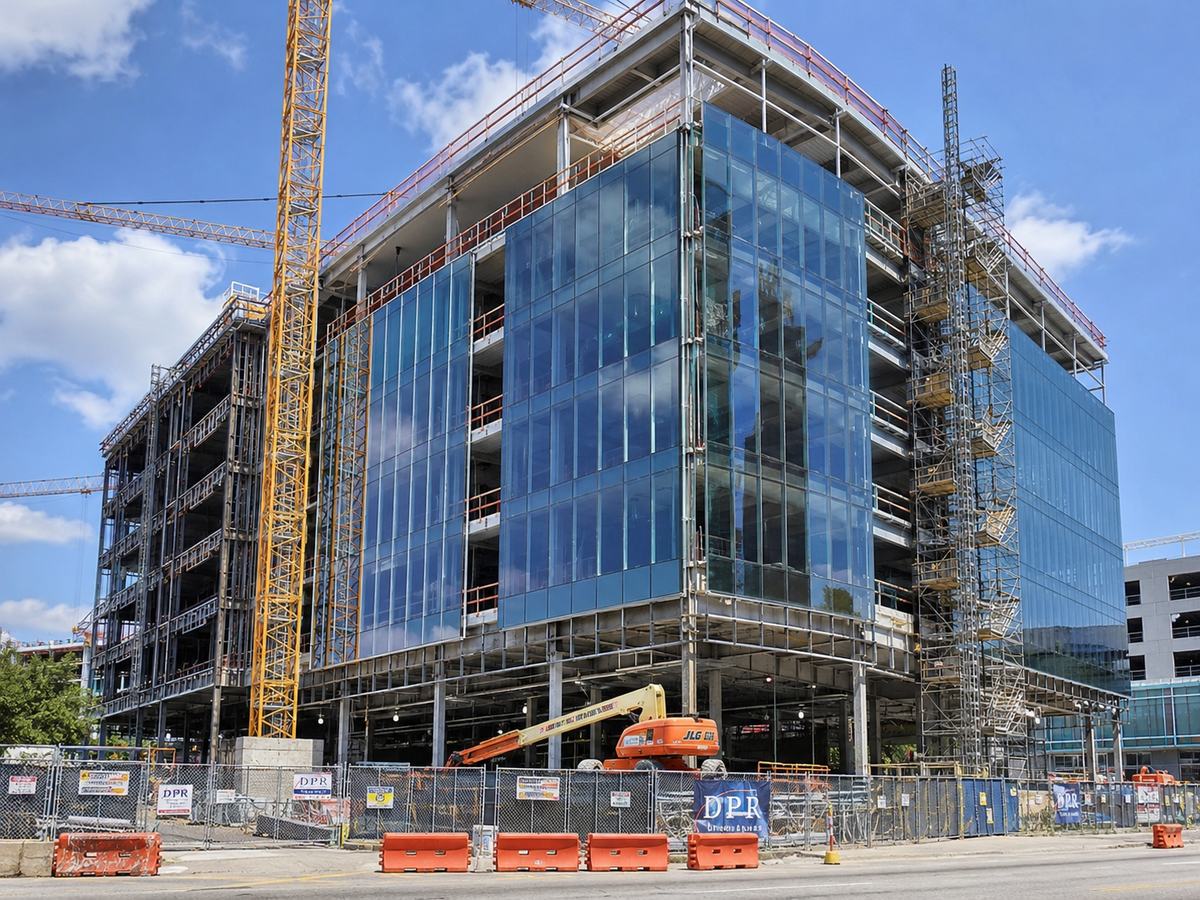
What changes the funding
Commercial development — office, retail and industrial — is driven by pre-commitment. For a hold, leverage is set against the completed, leased value (net rent capitalised at a market yield); for a strata or for-sale project, against gross realisation. Either way, the tenant covenant, lease length (WALE) and the percentage of space pre-leased do more to shape the funding than construction cost.
We package the submission around the pre-commitment and covenant evidence, and add mezzanine where it lifts leverage economically.
| Valuation basis | Leased investment value (hold) or gross realisation (for sale) |
|---|---|
| Key credit test | Pre-commitment %, tenant covenant, WALE, location |
| Typical leverage | Against completed value and total cost |
| Repaid by | Investment sale/refinance, or strata settlements |
Worked example
A commercial development with a $24.0m end value. Commercial senior tends to be more conservative, so a mezzanine layer is common to bridge to the developer's target equity.
| Layer | Amount | % of cost |
|---|---|---|
| Senior debt @ 9.00% | $11.37m | 60% |
| Mezzanine @ 16.00% | $1.90m | 10% |
| Developer equity | $5.69m | 30% |
| Total development cost | $18.96m | 100% |
| End value (GRV) | $24.00m |
|---|---|
| Loan to value (LVR) | 55.3% |
| Loan to cost (LTC) | 70.0% |
| Blended cost of debt | 10.00% |
| Finance cost (interest) | $1,326,933 |
| Brokerage — BluCow (indic.) | $129,259 + GST |
| Development profit | $4.56m |
| Margin on cost | 24.1% |
| Return on equity | 80.3% |
| Equity multiple | 1.80x |
Illustrative only — actual leverage, pricing and returns depend on the lender, valuation, QS report and the specific project.
When it's the right structure
Commercial finance suits developers delivering office, retail or industrial space with a credible pre-commitment, whether the plan is to hold the completed investment or sell down. The stronger the tenant and the deeper the pre-lease, the sharper the funding.
Advantages and limitations
Advantages: leverage tied to a pre-committed income stream and a defensible completed value. Limitations: the deal lives on tenant covenant and pre-commitment; speculative space funds at lower leverage and higher cost.
Related services
- Property development finance (overview) →
- Childcare centre development finance →
- Service station development finance →
Frequently asked questions
How is a commercial development valued for finance?
Two ways, depending on your exit. For a hold, it's valued as an investment — net rent under the pre-committed leases capitalised at a market yield. For a strata or for-sale project, it's assessed on gross realisation. The level of pre-commitment and the tenant covenant drive how much a lender will advance.
Do I need pre-leases to fund a commercial build?
Materially, yes for a hold. A strong pre-commitment (pre-lease) to a credible tenant establishes the income and therefore the completed value, which underpins leverage. Speculative (un-leased) commercial is fundable but at lower leverage and higher cost.
What do lenders focus on for commercial development?
Tenant covenant strength, lease length (WALE), the pre-commitment percentage, and location — alongside the usual build, cost and margin tests. The income case, not just construction cost, carries the funding.