


Project overview
Property development finance is often explained through ratios, term sheets and generic examples. Those concepts matter, but developers usually understand them best when they are placed inside a complete project story. This case study follows an illustrative Australian townhouse development from site acquisition through to settlement and debt repayment. The figures are realistic enough to demonstrate how a lender may assess the transaction, but the project is hypothetical and is not based on any individual BluCow Capital client.
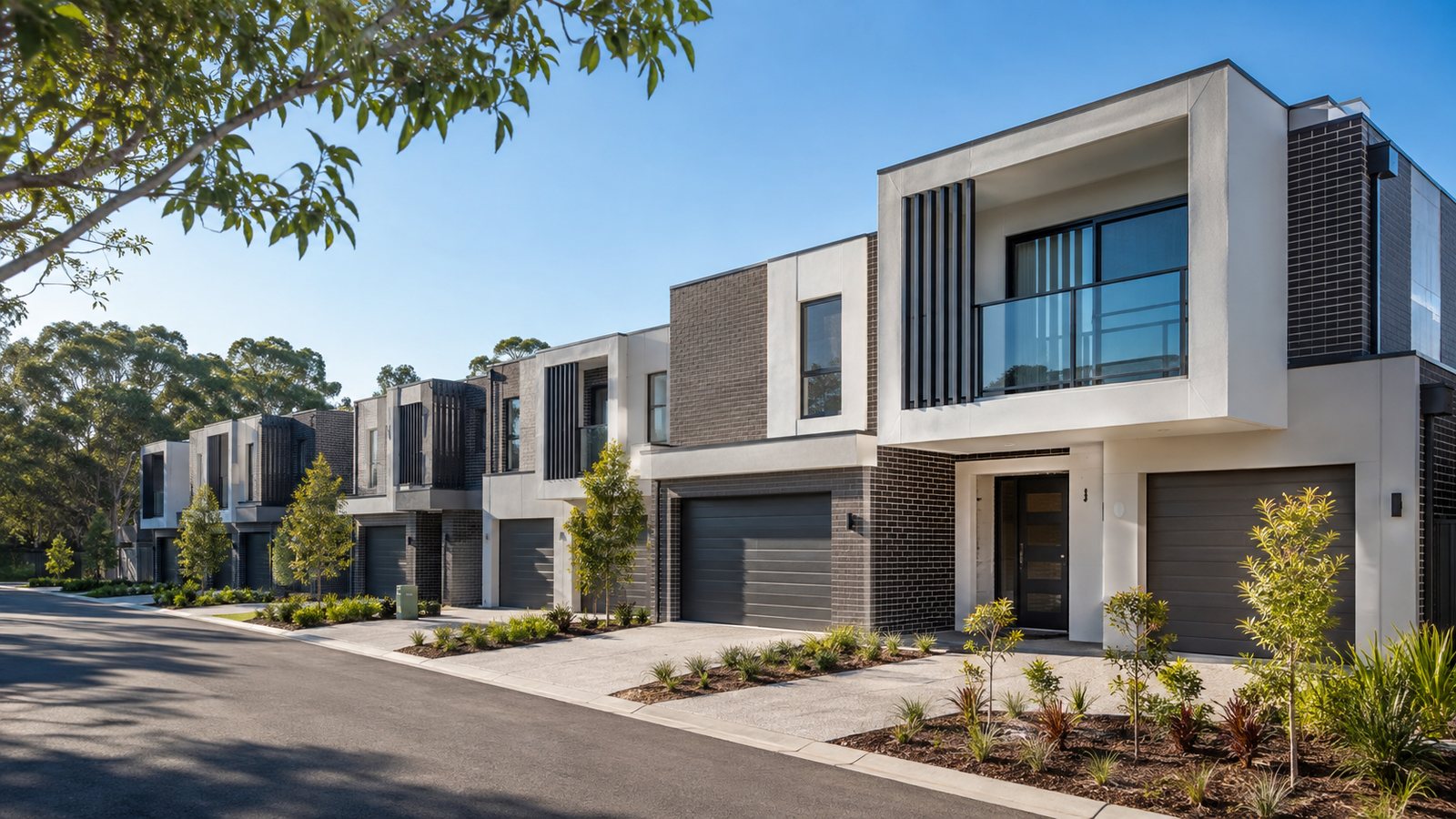
The proposed development comprised 20 architecturally designed townhouses on a well-located infill site in South-East Queensland. The developer had completed several smaller projects but had not previously undertaken a development of this scale. The total development cost was approximately $15 million, including land, construction, professional fees, finance costs, selling expenses and contingency. The completed gross realisation was forecast at $19.6 million.
At first glance, the proposal appeared straightforward. The site was under contract, the planning pathway was reasonably advanced, the local market had demonstrated demand for new townhouse stock and the preliminary feasibility showed an acceptable profit margin. However, the developer still had to solve several interconnected funding issues. These included the amount of equity available at settlement, whether the land could be financed before the development approval was finalised, how much presale coverage would be required, whether the selected builder would be acceptable to the lender and how the loan would be repaid if settlements were slower than forecast.
The eventual solution used a staged funding strategy. An acquisition facility allowed the developer to settle the site while completing the final approval and construction documentation. Once those conditions were satisfied, the loan was refinanced into a construction facility with capitalised interest. Presales reduced the lender's market risk, while progressive townhouse settlements repaid the debt. The case demonstrates why development finance is not simply a matter of applying an LVR to a valuation. The timing, structure and sequencing of the entire transaction were central to its financeability.
The development site and proposal
The site consisted of three adjoining residential lots in an established middle-ring suburb. The combined land area was sufficient for a 20-townhouse scheme with a mix of three-bedroom and four-bedroom dwellings. The location was close to schools, public transport, retail services and major employment corridors. Comparable townhouse projects in the surrounding area had sold well, although most competing developments were either smaller boutique schemes or older stock with inferior layouts.
The purchase price was $4.1 million. Acquisition costs, including transfer duty, legal fees, due diligence and holding costs through settlement, brought the initial land commitment to approximately $4.45 million. The developer negotiated a six-month settlement period, which created time to progress the planning approval and undertake geotechnical, services, traffic and civil investigations before taking title.
The planning application was lodged before the contract became unconditional. By the time the finance submission was prepared, the application had received a positive preliminary assessment but had not yet reached final approval. This distinction was important. Some lenders were willing to fund the land subject to satisfactory planning due diligence, while others would only consider the transaction after the development approval became effective. The project therefore required a lender with appetite for genuine pre-development risk rather than a standard construction lender that expected all approvals to be in place.
The proposed design included detached and semi-detached townhouses, private courtyards, internal roads, visitor parking and landscaped communal areas. The product was aimed at owner-occupiers, downsizers and established families rather than only investors. This broader buyer profile supported the valuation and presale strategy because the project was not dependent on one narrow segment of the market.
“The deal was funded on evidence, not optimism.”
— The Australian Property Development Handbook
The preliminary feasibility
The developer's first feasibility estimated gross sales revenue of $19.6 million. This was based on an average selling price of $980,000 per townhouse, with larger end units priced above $1 million and smaller internal units priced below the average. The sales evidence supported the price range, although the lender's valuer applied slightly more conservative assumptions to some of the premium dwellings.
The total development cost was estimated at $15.0 million. The largest components were the $4.1 million land purchase, approximately $7.25 million of building and civil works, and roughly $3.65 million of professional fees, statutory charges, finance costs, marketing, selling costs, contingency and acquisition expenses. On the developer's base case, the project generated a forecast development profit of $4.6 million before income tax.
That equated to a profit on cost of approximately 30.7 per cent and a profit on revenue of approximately 23.5 per cent. Those margins were above the minimum level many lenders would generally seek for a project of this nature, but the lender did not accept them without adjustment. The credit assessment tested whether the margin remained adequate after valuation changes, construction cost pressure, delays and higher interest expense.
The lender's quantity surveyor also reviewed the construction budget. The original building allowance was based on a detailed tender, but several provisional sums remained for retaining walls, external works and service upgrades. The quantity surveyor recommended increasing the construction contingency from 4 per cent to 6 per cent of hard costs. This adjustment reduced the base-case profit but improved the reliability of the funding plan because it lowered the risk of an unfunded cost-to-complete shortfall later in the project.
The developer's equity position
The developer had approximately $2.6 million of cash available for the project. A further $450,000 was expected from the sale of a completed investment property before construction commencement. The developer also had other property assets, but did not want to sell them or pledge them indefinitely. The available cash was therefore meaningful, but it was not enough to fund the land purchase and all pre-construction costs without debt.
This is a common problem in development finance. A project may be profitable and the sponsor may have substantial net worth, yet the timing of the equity requirement creates a liquidity gap. The developer needed to settle the land months before construction funding could be drawn. During that period, planning consultants, architects, engineers, legal advisers and marketing consultants also required payment.
The funding structure had to recognise the difference between net worth and immediately available cash. The lender was satisfied that the developer had financial substance, but still required evidence that the cash equity could be contributed when needed. The credit team reviewed bank statements, asset and liability statements, tax returns, company financials and the proposed sale of the investment property. It also assessed whether the developer retained enough liquidity outside the project to deal with unexpected personal or business obligations.
After adjusting for transaction costs, pre-development expenditure and a liquidity reserve, the lender treated the developer's genuine equity contribution as approximately $3.0 million. The balance of the equity requirement would be funded progressively from additional cash generated by the developer's existing business and from value created as the planning approval became unconditional.
Stage one: acquisition and pre-development finance
The first facility was an acquisition and pre-development loan secured by a first mortgage over the site. The lender advanced 65 per cent of the lower of the purchase price and the as-is valuation, plus a limited allowance for approved pre-development costs. The initial land advance was approximately $2.665 million, leaving the developer to contribute the balance of the purchase price, acquisition costs and lender fees.
The facility had a 12-month term. Interest was capitalised within an approved interest reserve rather than paid monthly, although the developer remained responsible for any interest beyond the approved limit. The lender required the development application to remain active, the consultant team to be retained and material changes to the scheme to be approved before implementation.
The acquisition lender did not assume that the planning approval would definitely be obtained. Its exit analysis considered three possible outcomes. The preferred outcome was refinance into a construction facility after approval. The second was sale of the site with an approved development scheme if the developer chose not to proceed. The third was sale of the land in its existing state if the approval process failed. Because the loan represented a conservative percentage of the as-is land value, the lender had a credible fallback position.
This stage illustrates why acquisition finance and construction finance should not be treated as the same product. The acquisition lender was primarily exposed to land value, planning progress and the developer's ability to complete the approval process. The later construction lender would be exposed to building costs, builder performance, sales velocity and settlement risk. A lender comfortable with one stage is not necessarily comfortable with the other.
Talk to BluCow about your project →
Planning approval and design development
The development approval was issued approximately four months after settlement. It contained several infrastructure and design conditions that had not been fully reflected in the original feasibility. These included additional acoustic treatment, an upgraded stormwater connection and changes to visitor parking. The consultant team estimated that the conditions added approximately $180,000 to the project cost.
The developer initially considered absorbing the additional cost within the existing contingency. The quantity surveyor advised against that approach because doing so would leave too little protection for genuine construction variations. The feasibility was therefore updated, the contingency was restored to an appropriate level and the revised total development cost increased to approximately $15.0 million.
At the same time, the architect completed the working drawings and the builder converted its preliminary estimate into a lump-sum design-and-construct contract. The lender's legal and technical advisers reviewed the contract, including the variation provisions, delay damages, security, insurance, defects obligations and termination rights. The lender required several amendments before accepting the contract for construction funding.
The planning approval improved the land value, but the lender did not treat the entire uplift as cash equity. Some of the value increase could be recognised as sponsor equity because it represented value created through the developer's work and risk. However, the lender still focused on the amount of hard cash invested and available to meet costs. This prevented the funding structure from becoming overly dependent on a paper revaluation.
Presales and the sales strategy
The marketing campaign commenced shortly after development approval. The developer appointed a local project marketer with experience selling owner-occupier townhouse product. Prices were released in stages so that early presales could establish market evidence without selling too much of the project at discounted launch prices.
The construction lender required qualifying presales with a minimum aggregate value sufficient to cover an agreed percentage of the senior debt. The contracts had to be unconditional apart from standard settlement conditions, supported by acceptable deposits and entered into with purchasers who were not related to the developer. The lender also applied concentration limits so that the presale requirement could not be satisfied by a small number of bulk investors.
Before construction finance approval, eight townhouses were under contract for a total of approximately $7.6 million. Deposits of 10 per cent were held in trust. The presales covered a substantial portion of the forecast debt, although not the entire facility. Because the project consisted of only 20 dwellings and the lender's valuation supported the unsold stock, the lender accepted the presale position subject to ongoing sales reporting.
The sales strategy balanced lender certainty against project profitability. Heavy discounting could have produced more presales, but it would also have reduced the gross realisation and potentially reset the valuer's expectations for the remaining stock. The developer instead secured enough early sales to satisfy the lender while retaining higher-value stock for later release.
Stage two: the construction facility
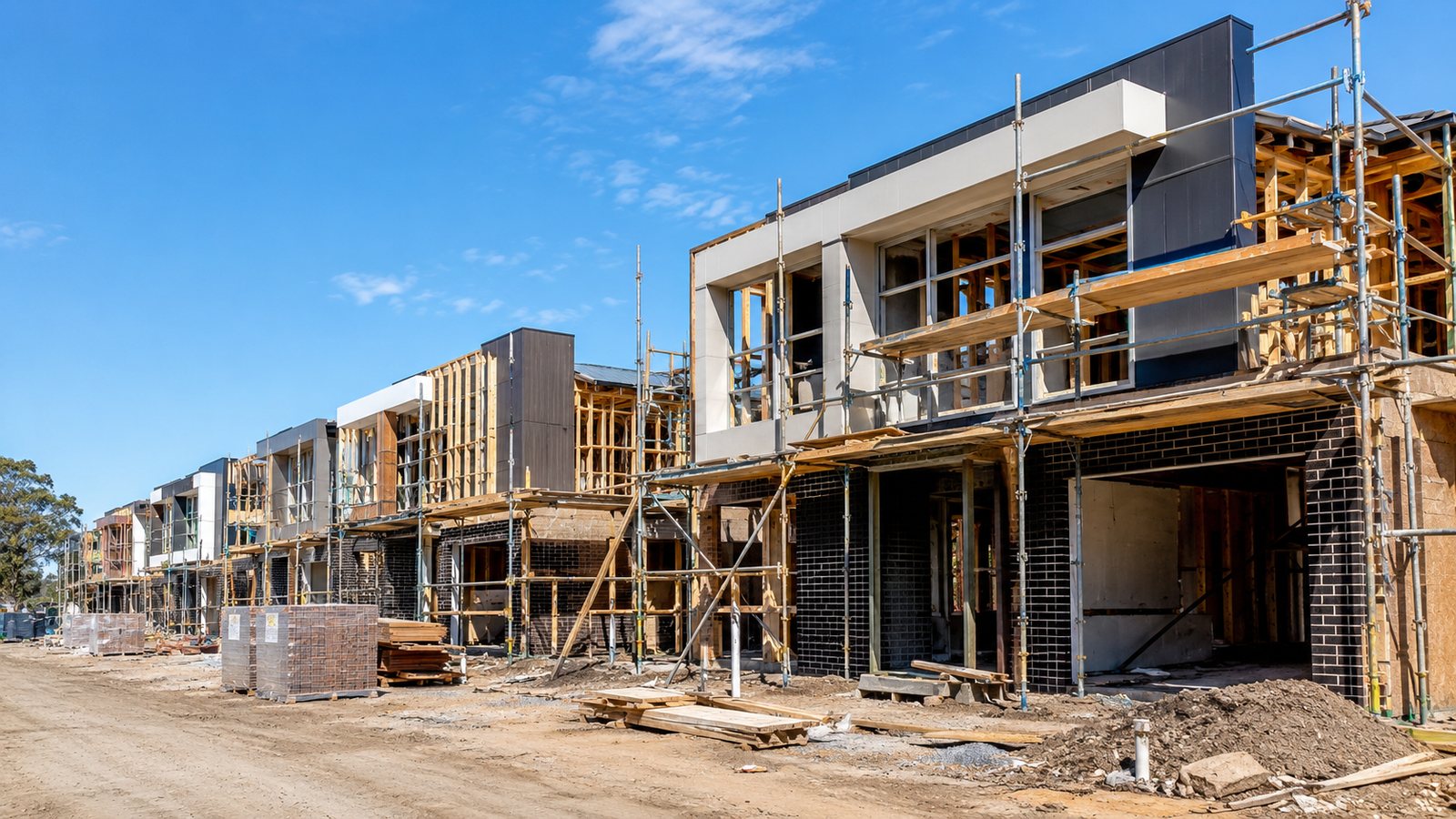
Once the development approval, building contract, presales and detailed cost plan were in place, the project was refinanced into a senior construction facility. The new lender repaid the acquisition loan and provided a facility for land refinance, construction costs, approved professional fees, statutory charges, interest and lender fees.
The maximum senior facility was $10.5 million. This represented 70 per cent of the $15.0 million total development cost and approximately 53.6 per cent of the $19.6 million gross realisation. Both ratios were within the lender's policy for an experienced sponsor, acceptable presales and a fixed-price contract with a suitable builder.
The facility was not advanced in one amount. The land refinance occurred at financial close, while the construction component was progressively drawn against certified work. The lender's quantity surveyor inspected the project before each drawdown, confirmed work completed, reviewed variations and certified that the remaining undrawn funds were sufficient to complete the development.
The developer was required to contribute all remaining equity before the lender funded certain categories of cost. This equity-first approach reduced the lender's exposure at the beginning of construction and demonstrated that the sponsor remained fully committed. In practice, the developer had already invested most of the required equity through the land settlement, planning process, professional fees and finance costs incurred before the construction refinance.
Interest was capitalised within the facility. This avoided monthly cash interest during construction, but it also meant that delays increased the peak debt. The approved finance budget assumed a 16-month construction and settlement period with a three-month buffer. Any extension beyond the facility term would be subject to lender approval, an extension fee and potentially a higher interest margin.
“A clean submission is worth a rate reduction.”
— The Australian Property Development Handbook
How the lender assessed the builder
The builder was a mid-sized residential construction company with relevant townhouse experience. It had completed several projects of comparable scale and had an established subcontractor network. However, the lender did not rely on the builder's reputation alone. It reviewed the company's financial statements, current workload, pipeline, key personnel, litigation history, licence status and recent project performance.
The builder's balance sheet was adequate but not exceptionally strong. The lender therefore required a higher level of retention under the building contract and insisted on bank guarantees for performance security. It also required evidence that the builder had locked in pricing for major trades and materials before first drawdown.
The quantity surveyor compared the contract sum with benchmark rates and reviewed whether the construction program was realistic. Particular attention was given to retaining walls, civil works, electrical infrastructure and external landscaping because these items commonly create cost overruns in townhouse developments. The lender also confirmed that the contract allowed sufficient access and step-in rights if the builder defaulted.
Builder assessment was one of the most important parts of the credit process. A profitable feasibility cannot protect a lender if the builder fails midway through construction and the remaining contract price is insufficient to engage a replacement. The lender's focus was therefore not only whether the contract was fixed price, but whether the party providing that fixed price had the capacity to honour it.
Construction drawdowns and cost control
Construction commenced shortly after financial close. The contractor submitted monthly progress claims, which were reviewed by the project manager and then assessed by the lender's quantity surveyor. The lender funded only the amount certified as properly due after taking account of retention, previous payments and approved variations.
During the first six months, the works progressed broadly in line with budget. A latent ground condition was then identified near the rear boundary, requiring additional excavation and retaining treatment. The variation cost approximately $145,000. Because the project had maintained a genuine contingency rather than using it to cover known approval costs, the variation could be absorbed without an immediate equity call.
Later in construction, the developer upgraded several kitchens and landscaping packages to support higher pricing on the remaining unsold stock. Those upgrades were commercially sensible, but the lender did not automatically fund them. Discretionary upgrades were outside the original approved cost plan, so the developer contributed the additional amount from its own cash resources.
The distinction between necessary variations and discretionary enhancements mattered. A lender may fund a genuine unforeseen cost if the facility remains within approved limits and the project remains fully funded. It is less likely to fund elective specification changes that primarily benefit the developer's sales strategy. Developers should therefore maintain a separate liquidity reserve rather than assume every variation will be absorbed by the loan.

Sales during construction
Sales activity continued during the build. As the project became more visible and construction risk reduced, buyer confidence improved. Five additional contracts were exchanged during the middle of the construction period, bringing total presales to 13 townhouses. The average price of the later sales was higher than the launch pricing, which supported the original gross realisation.
The lender received monthly sales reports showing enquiries, inspections, contracts, cancellations and purchaser finance status. It also monitored whether any contracts were materially below valuation or contained unusual incentives. Large rebates, rental guarantees or undisclosed inclusions can reduce the effective sale price and may cause a lender to exclude a contract from debt coverage calculations.
Two purchasers requested extended settlement dates. The developer agreed to one request but declined the other because too many delayed settlements would have affected the facility repayment profile. This demonstrates that sales management during construction is not only a marketing function. Contract terms and settlement timing directly influence debt reduction and interest expense.
By practical completion, 16 of the 20 townhouses were under contract. The remaining four included two premium end units that the developer had intentionally held back and two standard units that had not yet sold. The lender was comfortable with the residual stock because the project debt was expected to reduce significantly from the first wave of settlements.
Running your own numbers?
Open the feasibility calculators →Practical completion, titles and settlements
Practical completion was achieved approximately three weeks later than the original construction program. The delay arose from authority inspections and final external works rather than major builder underperformance. Because the finance facility included a realistic time buffer, the delay did not trigger a default or require an extension.
After practical completion, the project still required separate titles, occupancy approvals, final survey documentation and satisfaction of council conditions before settlements could occur. This post-construction period is frequently underestimated. A building may appear complete while the loan continues to accrue interest because legal settlement cannot yet take place.
The first settlements occurred six weeks after practical completion. The lender had established minimum release prices for each townhouse. At settlement, sale proceeds were paid to the lender and applied against the debt after allowing for approved selling costs and statutory adjustments. The release prices were set high enough to ensure that debt reduced progressively rather than leaving too much of the facility attached to the final unsold dwellings.
Thirteen settlements occurred within the first month, followed by three more in the next six weeks. Those settlements reduced the senior debt to a level well below the value of the four remaining townhouses. The lender then agreed to release additional surplus proceeds to reimburse part of the developer's contributed equity, while retaining enough debt reduction to preserve a conservative residual-stock LVR.
The final project outcome
The final four townhouses sold over the following three months. Two achieved prices above the original feasibility, one sold broadly in line with valuation and one required a modest discount to secure a prompt settlement. Total gross revenue was approximately $19.75 million, slightly above the original $19.6 million forecast.
The final total development cost was approximately $15.18 million. The main cost increases were the latent ground condition, planning-related infrastructure works and additional interest from the three-week construction delay and settlement timing. These increases were partly offset by savings in marketing and several professional-fee categories.
The resulting development profit was approximately $4.57 million before income tax. This represented a profit on final cost of around 30.1 per cent and a profit on revenue of approximately 23.1 per cent. The outcome was therefore close to the original feasibility despite several changes during delivery.
The senior lender was repaid in full from settlement proceeds. The developer recovered its contributed equity and retained the remaining profit after project expenses. The return was not achieved because nothing went wrong. It was achieved because the structure contained enough contingency, liquidity, time and sales flexibility to absorb the issues that did arise.
Capital stack summary
At peak, the project was funded with approximately $10.5 million of senior debt and $4.5 million of sponsor equity and value contribution. The debt represented 70 per cent of total development cost and approximately 53.6 per cent of gross realisation. The developer's equity included cash contributed at acquisition, pre-development costs, additional cash during the project and recognised value created through planning.
The developer considered mezzanine finance early in the process because it would have reduced the cash equity requirement. Ultimately, the stronger presale position and improved approved-land valuation allowed the project to proceed with senior debt only. Avoiding mezzanine finance reduced the overall funding cost and simplified the security structure.
That does not mean mezzanine finance would necessarily have been inappropriate. If the developer had been unable to contribute the required equity, a carefully structured mezzanine tranche might have allowed the project to proceed while preserving capital for other projects. The correct comparison would have been the incremental cost of mezzanine finance against the value of retaining that equity, not simply the difference in headline interest rates.
The capital structure was effective because it matched the project's risk profile. Conservative senior leverage, meaningful sponsor equity, acceptable presales and a viable builder produced a facility that could tolerate modest adverse events without becoming distressed.
“Structure decides whether a good project is also a fundable one.”
— The Australian Property Development Handbook
What could have caused the loan to fail
Several aspects of the project could have produced a very different outcome. If the planning approval had required a major redesign, the land may not have supported the expected value or density. If the builder had priced the project too aggressively and later failed, the replacement cost could have consumed the contingency and profit margin. If presales had been heavily investor-dependent, purchaser finance failures may have delayed settlements.
The project would also have become more difficult if the developer had treated all available cash as project equity and retained no external liquidity. Even a fully funded construction budget can experience costs that are not immediately reimbursed by the lender. Legal disputes, purchaser incentives, marketing changes, tax obligations and non-funded upgrades may require cash outside the approved facility.
A weaker release-price structure could have created residual-stock risk. If the lender had allowed too much sale revenue to be released to the developer after early settlements, the remaining debt may have been too high relative to the final unsold dwellings. Conversely, release prices that captured all proceeds until the last settlement would have placed unnecessary pressure on the developer's liquidity. The final structure balanced debt reduction with controlled equity release.
The project also relied on an achievable exit period. A lender may approve a facility based on sound values and costs, yet the loan can still run into difficulty if the term expires before titles and settlements occur. The inclusion of a realistic buffer was therefore a credit strength rather than wasted time.

Key lessons for developers
The first lesson is that financing should be planned before the site becomes unconditional. The developer used the long settlement period to progress planning, investigate site risks and identify lenders with appetite for acquisition-stage exposure. Had the developer waited until shortly before settlement, the available options would have been narrower and more expensive.
The second lesson is that a strong feasibility is not a static spreadsheet. The budget was revised when approval conditions, quantity-surveyor recommendations and tender information changed. Each update reduced uncertainty and made the eventual construction facility more reliable. Protecting the original profit figure by ignoring emerging costs would have weakened the project rather than strengthened it.
The third lesson is that presales should be managed strategically. The developer secured enough early contracts to satisfy the lender but did not discount the entire project at launch. This preserved the opportunity to achieve stronger pricing as construction progressed.
The fourth lesson is that the builder and building contract can be as important as the site. Lenders assess whether the contractor can actually deliver the fixed price, not merely whether the words 'fixed price' appear on the contract. Financial capacity, workload, subcontractor relationships and contract protections all matter.
The fifth lesson is that contingency and liquidity are different. The project contingency covered approved project costs. The developer's separate liquidity reserve covered items the lender did not fund or reimbursed only later. Both were necessary.
The final lesson is that the exit strategy must be modelled dwelling by dwelling. Aggregate sales revenue may appear more than sufficient to repay the debt, but settlement timing, release prices, selling costs and unsold stock determine whether cash actually reaches the lender when required.
These principles come from our free guide.
Download the handbook →How a funding adviser can add value
A development finance adviser can help translate a project into a funding structure that reflects the sequence of risk. In this case, the key task was not simply finding the lowest interest rate. It was identifying an acquisition lender willing to accept planning risk, then transitioning the project into a construction lender with appropriate leverage, presale settings, drawdown mechanics and release prices.
The adviser can also coordinate the information required by valuers, quantity surveyors, lawyers and credit teams. Incomplete or inconsistent information can create delays that are especially dangerous when a land settlement date is approaching. A well-managed submission presents one coherent set of assumptions across the feasibility, valuation brief, building contract, sales schedule and funding request.
Different lenders may also calculate leverage and equity differently. One lender may recognise approved-land value as equity, while another may focus primarily on historical cash cost. One may lend against total development cost, while another excludes certain finance, marketing or related-party costs. Understanding those differences can materially change the amount of cash the developer must contribute.
Frequently asked questions
Was the $15 million figure the loan amount or the total development cost? In this case study, $15 million was the approximate total development cost. The maximum senior construction facility was $10.5 million, with the balance funded through developer equity and value contribution.
Why was the lender willing to fund before the development approval was final? The acquisition loan was conservative relative to the as-is land value and had credible fallback exits. The lender was specifically comfortable with planning-stage risk. A standard construction lender may not have been willing to provide the same facility.
How much equity did the developer contribute? The overall equity and value contribution was approximately $4.5 million at peak. The exact cash timing varied because some equity had already been invested in acquisition and pre-development costs, while some value was created through the approval process.
Why were presales required when the LVR was relatively low? Presales provided evidence of market demand and reduced the lender's reliance on future unsold stock. Lenders assess repayment certainty as well as leverage.
Could the developer have retained some townhouses instead of selling all of them? Potentially, but the retained stock would have required a refinance based on completed value, rental income, servicing capacity and an acceptable investment LVR. That strategy would need to be agreed and modelled before the construction facility matured.
What happens if the project cost exceeds the approved facility? The developer is generally required to fund the shortfall unless the lender agrees to increase the facility. Lenders will not assume that every cost overrun will be financed, which is why contingency and external liquidity are essential.
Are the figures in this case study typical? They are illustrative. Actual leverage, presale requirements, pricing, fees, equity recognition and credit conditions vary by lender, sponsor, location, asset type, market conditions and project risk.
Conclusion
This townhouse development was financeable because the project combined an acceptable site, realistic feasibility, sufficient sponsor commitment, a credible builder, measured presales and a clear settlement-led exit. The funding solution evolved as the project moved from planning risk to construction risk and finally to settlement risk.
The most important point is that development finance should be designed around the life of the project. A facility that solves the land settlement but cannot transition into construction is incomplete. A construction loan that does not allow enough time for titles and settlements is equally dangerous. The strongest structure is one that anticipates each stage, identifies the likely pressure points and maintains enough flexibility to manage them.
For developers considering a townhouse, apartment, subdivision, industrial or mixed-use project, early finance planning can materially improve execution. A lender-ready feasibility, realistic program, suitable builder, documented equity position and clearly modelled exit will usually create more funding options and a stronger negotiating position.
This article is general information only and does not constitute financial, legal, tax, investment or credit advice. Development finance structures and outcomes vary materially. Developers should obtain advice from appropriately qualified professionals before entering into any transaction.