



A well-located industrial estate with a credible builder, conservative valuation and clear tenant demand may receive strong lender interest. A speculative office project, unproven retail concept or highly leveraged mixed-use development may be assessed far more cautiously—even when the headline projected profit appears attractive.
The central issue is not simply whether capital exists. It is whether the project can satisfy a lender's requirements for leverage, cost-to-complete, construction delivery, leasing risk and repayment.
Developers therefore need to understand more than the advertised interest rate. They must compare the complete funding structure: the maximum loan, required equity, valuation basis, presale or prelease conditions, drawdown process, interest reserve, covenants, extension provisions, release prices and exit strategy.
This guide explains how commercial property development finance works in 2026, what lenders are focusing on, which projects are attracting capital and how developers can prepare a stronger funding application.
Important: The figures and examples in this article are illustrative only. Lending policies, pricing, leverage and market conditions vary between lenders and can change quickly.
The Commercial Development Finance Market in 2026
Australia's commercial development finance market in 2026 is best described as selective rather than closed.
The Reserve Bank of Australia reported in its March 2026 Financial Stability Review that fundamentals had continued to improve across most Australian commercial real estate markets and that there was little evidence of financial stress among owners. It also noted that commercial real estate lending standards had eased slightly across parts of the bank and non-bank market, although the easing was described as incremental rather than indiscriminate.
At the same time, funding is not cheap. As at 22 July 2026, the RBA cash rate target was 4.35%, effective from 17 June 2026. The cash rate does not determine a development loan rate by itself, but it influences the cost of capital throughout the banking and private-credit system. Development facilities also include project risk margins, line fees, establishment fees, valuation costs, quantity-surveyor fees and sometimes minimum-return requirements.
Bank exposure to commercial property has continued to grow. APRA's March 2026 property-exposure statistics showed commercial property exposure limits of approximately $525.8 billion, up 8.7% over the year. This indicates that commercial property credit remains an important part of the Australian lending market, although aggregate growth does not mean that every development proposal will qualify.
Construction activity has also remained substantial. ABS preliminary data for the March 2026 quarter showed non-residential building work rising 2.5% during the quarter. Building-construction output prices rose 1.0% in the March quarter, highlighting that cost escalation has moderated from some earlier peaks but has not disappeared.
The practical 2026 position is therefore:
- Capital is available from banks, non-bank lenders, private-credit funds and specialist financiers.
- Strong projects can attract competitive terms.
- Lenders remain cautious about construction delivery, builder solvency and cost overruns.
- Asset-class selection matters.
- Valuation assumptions are being tested carefully.
- Fully speculative projects generally require stronger sponsorship, more equity or specialist capital.
- The cheapest quoted interest rate may not produce the best overall project outcome.
What Is Commercial Property Development Finance?
Commercial property development finance is funding used to acquire, develop, construct, reposition or complete income-producing or business-use property.
The category can include:
- Industrial warehouses and business parks
- Logistics and distribution facilities
- Retail centres and neighbourhood shopping projects
- Large-format retail developments
- Office buildings
- Medical centres and specialist health facilities
- Childcare centres and early-learning facilities
- Service stations and convenience retail
- Self-storage facilities
- Hotels, motels and serviced apartments
- Purpose-built accommodation
- Mixed-use commercial and residential projects
- Land subdivisions intended for commercial or industrial use
- Owner-occupied commercial premises
The loan is usually advanced progressively. The lender does not normally provide the entire approved facility on day one. Instead, funds are released against verified costs as construction progresses.
A quantity surveyor or project monitor commonly reviews each progress claim, confirms the value of completed work and assesses whether the remaining undrawn funds are sufficient to complete the project.
“Commercial senior is conservative by design — the gap above it is where structure earns its keep.”
— The Australian Property Development Handbook
Commercial Development Finance Is Different from an Investment Loan
A completed commercial property investment loan is generally assessed against an existing asset, current rental income, lease terms, tenant quality and debt-service capacity.
A commercial development loan is exposed to additional risks because the asset may not yet exist or may not yet produce income.
The lender must assess:
- Whether planning and building approvals are in place
- Whether the construction budget is realistic
- Whether the builder can complete the works
- Whether tenants or buyers will commit to the completed asset
- Whether the valuation is supportable
- Whether the borrower can fund cost overruns
- Whether interest has been allowed for during construction and lease-up
- Whether the completed project can be sold or refinanced
This is why a developer can own a valuable site and still struggle to obtain suitable development finance. The lender is funding the delivery of a future asset, not merely lending against land.
“The capital stack is a series of trade-offs between control, cost and return.”
— The Australian Property Development Handbook
The Main Sources of Commercial Development Finance
1. Major and Second-Tier Banks
Banks generally offer the lowest cost of debt when a project fits their policy.
They usually prefer:
- Experienced developers
- Strong balance sheets
- Conservative leverage
- Fixed-price or well-controlled construction contracts
- Meaningful sponsor equity
- Proven builders
- Preleases, presales or strong evidence of demand
- Clear refinance or sale exits
A bank facility can be attractive where the borrower has time to complete a detailed credit process and the project meets conventional requirements.
However, bank approval can be less flexible where the development is speculative, the asset is specialised, the borrower has limited experience, the planning approval is incomplete or the funding structure requires higher leverage.
Talk to BluCow about your project →
2. Non-Bank and Private-Credit Lenders
Non-bank lenders and private-credit funds have become an important source of commercial development capital.
They may offer:
- Faster decision-making
- Greater flexibility around presales and preleases
- Higher leverage
- Stretch senior facilities
- Residual-stock funding
- Land and pre-development facilities
- More flexible security structures
- Funding for specialised assets
- Solutions where timing is critical
The trade-off is usually a higher cost of capital. Pricing can include a higher interest margin, establishment fees, line fees, exit fees, minimum interest periods or minimum MOIC floors.
Private credit is not automatically easier finance. Specialist lenders still undertake detailed due diligence and may impose strict controls over drawdowns, cost overruns, leasing, reporting and project changes.
3. Mezzanine Finance
Mezzanine debt sits behind the senior lender but ahead of ordinary equity in the capital stack.
It can reduce the amount of developer cash required, but it is more expensive than senior debt because it carries greater risk.
A mezzanine facility may be useful where:
- The senior lender's maximum LTC leaves an equity gap
- The developer wants to preserve capital for another project
- The project has sufficient profit to absorb the higher cost
- The senior lender permits subordinated debt
- An intercreditor agreement can be negotiated
The combined cost and control provisions of the senior and mezzanine facilities must be assessed together.
4. Stretch Senior Finance
Stretch senior finance provides a single higher-leverage facility, commonly from one lender, that extends beyond conventional senior-debt limits.
It can simplify the capital stack by replacing a separate senior and mezzanine structure.
Potential advantages include:
- One lender
- One set of facility documents
- Fewer intercreditor issues
- Higher LTC
- Lower developer equity requirement
Potential disadvantages include:
- Higher pricing than conventional senior debt
- Stronger covenants
- Minimum-return provisions
- Greater sensitivity to delays
- Limited tolerance for changes once construction begins
Stretch senior funding is usually more suitable for experienced developers with a robust project and a clear exit.
“Value the asset on its income, then fund the cost.”
— The Australian Property Development Handbook
5. Equity and Joint-Venture Capital
Equity can be contributed by the developer, landowner, private investor, family office or institutional capital partner.
Equity absorbs the first loss and usually receives the residual profit after debt is repaid.

The cost of equity is not expressed only as an interest rate. It may involve:
- Preferred returns
- Profit shares
- Development-management fees
- Investor approval rights
- Board or committee control
- Dilution if further capital is required
- Developer-removal rights
A project should compare debt and equity using total economic cost, not headline pricing alone.
How Commercial Development Loans Are Commonly Structured
A typical facility may include several components.
Land or Acquisition Facility
This funds the purchase or refinance of the development site.
The lender assesses the site's current value, planning status, holding costs, environmental condition, existing income and the time required to reach construction commencement.
Land facilities are often more conservative than construction facilities because the lender is exposed before the project is fully approved or de-risked.
Running your own numbers?
Open the feasibility calculators →Construction Facility
The construction facility funds eligible hard and soft costs progressively.
Eligible costs may include:
- Builder progress claims
- Consultant fees
- Authority charges
- Professional fees
- Certain leasing costs
- Capitalised interest
- Contingency
The facility agreement will define which costs are permitted and which must be funded by the borrower.
Interest Reserve
Commercial developments often do not generate enough income to service debt during construction.
The lender may therefore capitalise interest within the approved facility. Interest is added to the loan balance rather than paid monthly from operating cash flow.
This does not make interest free. It means the project budget must include sufficient funding for interest until completion, lease-up, sale or refinance.
Leasing or Sales Costs
Depending on the asset, the facility may need to allow for:
- Leasing incentives
- Rent-free periods
- Agent commissions
- Tenant fit-out contributions
- Marketing costs
- Legal costs
- Sales commissions
- Settlement delays
A project can reach practical completion and still face a material funding gap if lease-up costs have not been properly included.
“A strong tenant covenant is collateral you can bank.”
— The Australian Property Development Handbook
Contingency
The contingency protects against unforeseen costs.
Lenders typically want a separate contingency rather than relying on projected profit as the only buffer. The appropriate amount depends on design completeness, contract type, project complexity, ground conditions and construction stage.
Cost-Overrun Support
The borrower is usually responsible for cost overruns.
The lender may require evidence that the sponsor has sufficient liquidity to meet overruns, regardless of whether the base feasibility includes a contingency.
“A lender funds the exit, not the dream — every metric is really a question about repayment.”
— The Australian Property Development Handbook
The Core Metrics Lenders Review
These principles come from our free guide.
Download the handbook →Loan-to-Cost Ratio
Loan-to-Cost measures the facility against the total eligible development cost.
LTC = Loan Amount ÷ Total Development Cost
For example, if total development cost is $20 million and the loan is $13 million:
LTC = $13 million ÷ $20 million = 65%
LTC indicates how much of the project cost is funded by debt and how much must be funded by equity or subordinated capital.
The definition of cost matters. A lender may exclude:
- Developer profit
- Some development-management fees
- Related-party margins
- Certain finance costs
- Non-cash land uplift
- Costs incurred outside an approved period
Developers should confirm the lender's eligible-cost definition before relying on an advertised LTC.
Loan-to-Value Ratio
LVR compares the loan with the lender's adopted value.
The relevant value may be:
- Current site value
- As-is value
- On-completion value
- Gross realisation value
- Stabilised investment value
LVR = Loan Amount ÷ Adopted Value
Commercial development lending can involve multiple valuation measures. A lender may cap the loan at the lower of a percentage of cost and a percentage of value.
Profit on Cost
Profit on Cost = Development Profit ÷ Total Development Cost
A strong profit margin provides a buffer against valuation declines, cost increases and delays.
Lenders may adjust the developer's feasibility before calculating profit. They may reduce projected revenue, increase costs, extend the programme and apply a higher capitalisation rate or softer sales rate.
The central issue is not simply whether capital exists.
Cost to Complete
At every drawdown, the lender considers whether available funds are sufficient to complete the project.
A simplified test is:
Available Funding = Undrawn Debt + Remaining Committed Equity
This must exceed the quantity surveyor's assessed remaining cost, including contingency and interest.
A project can be within its approved LTC and still fail the cost-to-complete test if costs have increased or equity has not been contributed as required.
Debt Service Coverage Ratio
For projects intended to be retained, lenders assess whether the completed net operating income can service the proposed investment debt.
DSCR = Net Operating Income ÷ Debt Service
The lender may apply a higher interest rate than the current rate and adjust rent, vacancy and expenses to test resilience.
Debt Yield
Debt Yield = Net Operating Income ÷ Loan Amount
Debt yield shows the income return on the lender's debt exposure before considering interest rates or amortisation.
It can be useful for investment exits because it highlights whether debt is supported by the underlying property's income.
Exit LVR
If the project is to be refinanced, the lender will calculate the expected LVR at completion and stabilisation.
The analysis usually considers:
- Market rent
- Vacancy
- Incentives
- Outgoings
- Capitalisation rate
- Refinance interest rate
- DSCR
- Valuation risk
The exit must work under realistic—not optimistic—assumptions.
Preleases, Presales and Tenant Risk
Commercial development finance often depends on future occupants or buyers.
Preleases
A prelease is an agreement with a tenant to occupy the property after completion.
Lenders consider:
- Tenant covenant strength
- Lease term
- Options
- Rent review structure
- Incentives
- Fit-out obligations
- Conditions precedent
- Guarantees
- Termination rights
- Whether the lease is legally binding
A signed heads of agreement may not carry the same weight as an executed agreement for lease.
A strong national tenant on a long lease can materially improve financeability. A short lease to a newly formed operating company may provide less comfort, even if the face rent is attractive.
Presales
Presales are more common for strata commercial, industrial units, mixed-use projects and service-commercial developments intended for individual sale.
Lenders assess:
- Contract price
- Deposit amount
- Purchaser quality
- Sunset dates
- Finance clauses
- Related-party sales
- Concentration risk
- Settlement timing
- Debt coverage from settlements
The lender may require a percentage of debt to be covered by qualifying presales before construction funding begins.
Speculative Development
A speculative development commences without sufficient preleases or presales.
Speculative projects can still be funded, particularly in sectors with strong demand, but lenders may require:
- Lower leverage
- More sponsor equity
- Stronger balance-sheet support
- A proven leasing track record
- Conservative valuation assumptions
- Additional interest and lease-up reserves
- Independent market evidence
The absence of precommitments increases both leasing risk and exit uncertainty.
How Lenders Assess Different Commercial Asset Classes
Industrial and Logistics
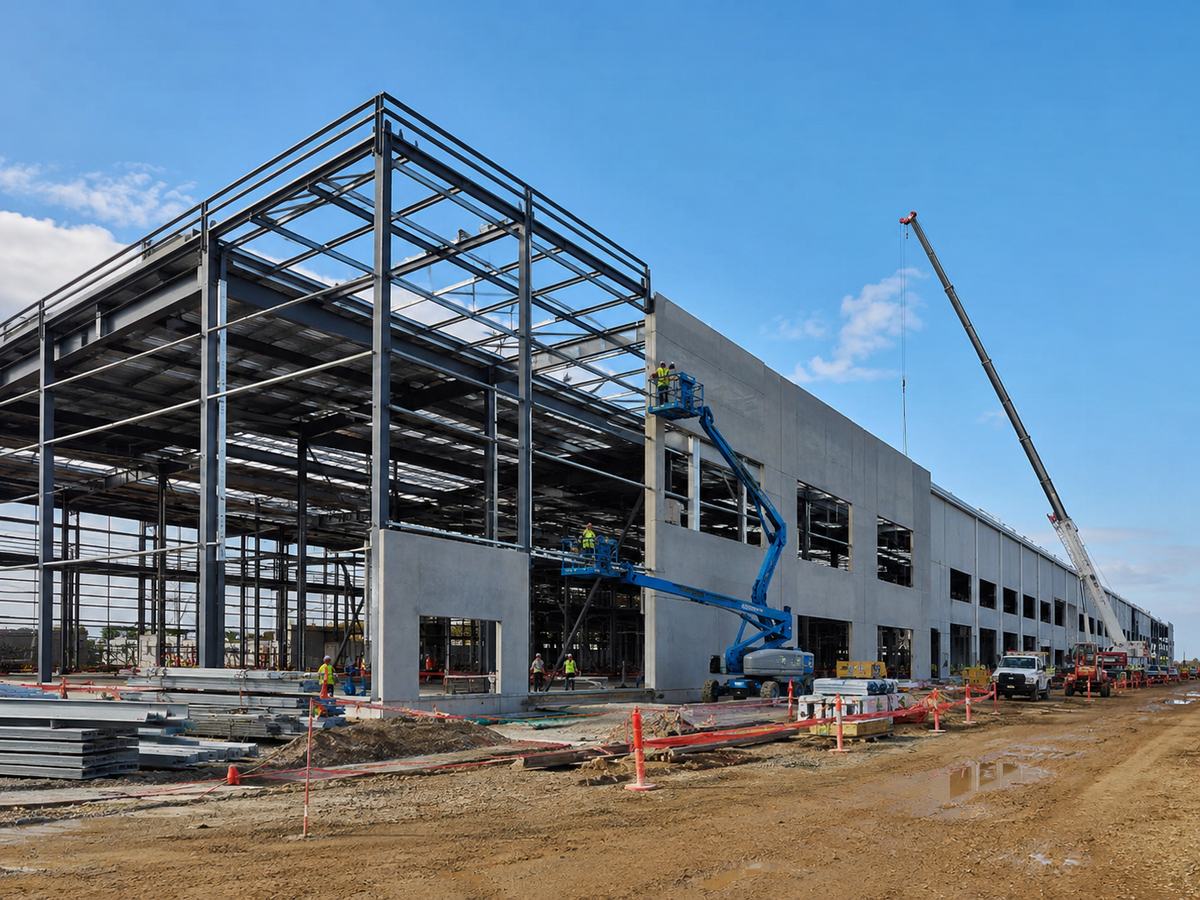
Industrial development has attracted substantial lender and investor interest, but lenders still distinguish between generic, adaptable product and specialised facilities.
They review:
- Location and motorway access
- Clearance heights
- Floor loading
- Hardstand
- Truck circulation
- Power supply
- Building efficiency
- Unit size
- Local vacancy
- Tenant demand
- Ability to subdivide or re-lease
A flexible warehouse in an established industrial precinct may be easier to finance than a highly specialised facility with limited alternative use.
Retail

Retail finance depends heavily on catchment, tenant mix and the sustainability of rent.
Lenders examine:
- Trade area
- Population growth
- Competition
- Anchor tenants
- Specialty leasing
- Rent-to-sales ratios
- Incentives
- Parking and access
- Online-retail exposure
- Operating costs
A neighbourhood centre anchored by essential services may be viewed differently from a discretionary retail project with untested demand.
Office
Office projects remain highly location- and grade-specific.
Lenders consider:
- Vacancy and sublease availability
- New supply
- Tenant demand
- Floorplate efficiency
- Environmental ratings
- End-of-trip facilities
- Incentives
- Refurbishment risk
- Hybrid-work patterns
- Secondary-market liquidity
A speculative office project usually requires a strong location, high-quality sponsorship and conservative lease-up assumptions.
Medical and Healthcare
Medical projects may benefit from defensive demand, but the property and operating business must be assessed separately.
Lenders review:
- Practitioner or operator strength
- Referral networks
- Licensing and approvals
- Specialist fit-out
- Lease terms
- Alternative use
- Population demographics
- Parking and accessibility
Highly specialised fit-out can increase replacement cost without creating equivalent resale value.
Childcare Centres
Childcare finance is influenced by operator quality, approvals, demographics, competition and lease structure.

Lenders focus on:
- Approved places
- Planning and licensing pathway
- Operator experience
- Lease covenant
- Rent coverage
- Local utilisation
- Competing centres
- Outdoor-space requirements
- Construction and fit-out cost
- Exit valuation
A long lease is valuable only if the operator can sustainably pay the rent.
Service Stations and Convenience Retail

These developments involve specialised construction and environmental considerations.
Lenders assess:
- Traffic counts and access
- Fuel supply arrangements
- Operator or tenant covenant
- Lease term
- Environmental approvals
- Contamination risk
- Underground infrastructure
- Convenience-retail income
- Alternative use
- Exit-market depth
Environmental due diligence is central because contamination can affect both construction and security value.
Hotels and Accommodation
Hotel development finance is closely linked to operating performance.
Lenders analyse:
- Occupancy
- Average daily rate
- Revenue per available room
- Operator and brand
- Management agreement
- Seasonality
- Tourism and corporate demand
- Food-and-beverage assumptions
- Pre-opening expenses
- Ramp-up period
Hotel projects often require a larger working-capital and ramp-up allowance than ordinary leased commercial property.
Self-Storage
Self-storage can appeal to lenders because of diversified customers and recurring revenue, but it usually requires a lease-up period.
The credit assessment includes:
- Local supply
- Population and dwelling density
- Customer acquisition
- Unit mix
- Occupancy ramp-up
- Operating expenses
- Management platform
- Stabilised valuation
A construction loan must fund not only completion but also the period required to achieve stabilised occupancy.
Mixed-Use Developments
Mixed-use projects combine several risk profiles.
A project may contain residential apartments, retail space, office suites and parking. Each component may have a different valuation method, sales programme, presale requirement and release mechanism.
The lender will assess:
- Shared construction costs
- Cost allocation
- Strata and title structure
- Component-specific revenue
- Cross-default risk
- Settlement sequencing
- Residual stock
- Whether one weak component can delay the entire exit
Mixed-use funding requires a particularly clear cash-flow and debt-allocation model.
Valuation Issues in 2026
Valuation remains one of the most common points of disagreement between developers and lenders.
Development Valuation
A development valuation may consider:
- Direct comparable sales
- Capitalisation of completed income
- Discounted cash flow
- Hypothetical development method
- Gross realisation value
- Residual land value
The lender will normally rely on its appointed valuer, even if the developer has obtained a separate valuation.
Capitalisation Rates
For income-producing assets:
Value = Net Operating Income ÷ Capitalisation Rate
If net operating income is $1.5 million and the capitalisation rate is 6.0%:
Value = $1.5 million ÷ 6.0% = $25 million
If the capitalisation rate softens to 6.5%:
Value = $1.5 million ÷ 6.5% = approximately $23.08 million
A 0.5 percentage-point movement has reduced the value by approximately $1.92 million without any change in rent.
This is why lenders test exit yields and do not rely solely on a developer's preferred valuation assumptions.
Incentives and Effective Rent
Face rent is not always the same as effective rent.
A lease may include:
- Rent-free periods
- Cash incentives
- Fit-out contributions
- Stepped rent
- Early termination rights
Valuers and lenders assess the economic rent after incentives and risk adjustments.
Stabilised Value Versus On-Completion Value
A completed but vacant building is not necessarily worth the same as a fully leased and stabilised investment.
The finance structure must allow for:
- Practical completion
- Tenant fit-out
- Lease commencement
- Rent-free periods
- Occupancy ramp-up
- Revaluation
- Refinance processing
A development loan with no lease-up tail may mature before the project is ready for investment finance.
Construction Risk Remains a Credit Priority
Even when market demand is strong, a lender will not ignore construction risk.
Builder Assessment
The lender may review:
- Licence and registration
- Financial statements
- Current work in progress
- Pipeline concentration
- Prior project performance
- Disputes and claims
- Subcontractor relationships
- Insurance
- Key personnel
- Capacity to absorb cost increases
A familiar builder is not automatically acceptable. The builder must be appropriate for the project's scale and complexity.
Contract Type
A fixed-price, fixed-time contract can reduce risk, but the label is not conclusive.
The lender and quantity surveyor will review:
- Provisional sums
- Exclusions
- Rise-and-fall clauses
- Latent-condition provisions
- Extension-of-time rights
- Liquidated damages
- Security and retention
- Design responsibility
- Parent-company guarantees
- Termination provisions
A contract with large exclusions may behave more like a cost-plus arrangement than a genuine fixed-price contract.
Developers therefore need to understand more than the advertised interest rate.
Quantity Surveyor Reporting
The lender's quantity surveyor commonly reviews:
- Construction budget
- Contract adequacy
- Contingency
- Programme
- Approvals
- Progress claims
- Variations
- Cost to complete
Drawdowns may be delayed if information is incomplete or the claimed amount is not supported.
Cost Overruns
The borrower normally carries cost-overrun risk.
Common sources include:
- Design development
- Latent conditions
- Authority requirements
- Services upgrades
- Material escalation
- subcontractor failure
- Weather delays
- Tenant variations
- Delayed approvals
The funding structure should identify where additional capital will come from before construction begins.
Worked Example: Industrial Development Finance
Consider an illustrative industrial project with the following assumptions:
- Land and acquisition costs: $6.0 million
- Construction and infrastructure: $12.0 million
- Professional, authority and leasing costs: $1.5 million
- Finance costs and contingency: $2.5 million
- Total development cost: $22.0 million
- On-completion value: $30.0 million
- Forecast development profit: $8.0 million
Scenario A: Conventional Senior Debt
Assume a lender offers the lower of:
- 65% of total development cost; and
- 60% of on-completion value.
LTC limit:
65% × $22.0 million = $14.3 million
LVR limit:
60% × $30.0 million = $18.0 million
The lower limit is $14.3 million.
Required funding outside senior debt is therefore:
$22.0 million − $14.3 million = $7.7 million
The developer must also maintain liquidity for non-funded costs and overruns.
Scenario B: Higher-Leverage Private Credit
Assume a specialist lender offers 75% LTC, subject to an acceptable valuation and project profile.
75% × $22.0 million = $16.5 million
Required funding outside debt becomes:
$22.0 million − $16.5 million = $5.5 million
This reduces the developer's initial equity requirement by $2.2 million compared with Scenario A.
However, the private-credit facility may have:
- A higher interest rate
- Higher establishment fees
- A minimum interest period
- A line fee
- More restrictive extension pricing
- Additional reporting obligations
The correct comparison is not simply $14.3 million versus $16.5 million. The developer should model:
- Total interest over the realistic programme
- Fees
- Equity opportunity cost
- Delay sensitivity
- Extension risk
- Whether preserving $2.2 million enables another profitable project
Stress Test
Suppose construction and finance costs increase by $1.0 million and the on-completion value falls by 5%.
Revised total development cost:
$22.0 million + $1.0 million = $23.0 million
Revised value:
$30.0 million × 95% = $28.5 million
Revised profit:
$28.5 million − $23.0 million = $5.5 million
Profit on cost has fallen from:
$8.0 million ÷ $22.0 million = 36.4%
To:
$5.5 million ÷ $23.0 million = 23.9%
The project may remain profitable, but the funding headroom and refinance outcome have weakened. A lender will analyse this downside position before approving the base case.
What Has Changed for Developers in 2026?
1. Interest Costs Require More Conservative Programmes
At a 4.35% cash rate, development funding costs remain material. Project rates sit above the cash rate because they include funding costs, risk margins and fees.
A three-month delay affects more than the completion date. It can increase:
- Capitalised interest
- Line fees
- Consultant costs
- Council charges
- Leasing costs
- Extension fees
- Equity IRR pressure
Feasibilities should include realistic approval, construction, lease-up and refinance periods.
2. Lender Appetite Is Asset-Specific
The phrase “commercial property” covers many different risks.
A lender may be comfortable with industrial development but cautious about speculative office. Another may specialise in childcare, healthcare or service stations. Matching the project to the right credit appetite is more important than sending the proposal to the largest possible number of lenders.
3. Private Credit Is a Mainstream Part of the Market
Private credit is no longer only a last-resort option. It can be used strategically for speed, leverage, flexibility or specialised assets.
However, borrowers should examine:
- Fund capacity
- Certainty of capital
- Approval authority
- Drawdown reliability
- Enforcement approach
- Extension policy
- Minimum-return provisions
The quality of the lender matters as much as the facility amount.
4. Builders and Cost-to-Complete Are Being Scrutinised
Construction activity remains high and input costs are still rising in parts of the market. Lenders therefore pay close attention to builder capacity, contract exclusions, contingency and the borrower's ability to inject further equity.
5. Refinancing Cannot Be Assumed
A refinance exit must satisfy the future investment lender's requirements.
The completed asset may need:
- A minimum occupancy level
- Executed leases
- Rent commencement
- A valuation based on effective rent
- Acceptable DSCR
- Acceptable exit LVR
- Evidence that incentives and defects are funded
Developers should test the refinance using conservative rates and valuation assumptions.
How to Improve the Chance of Approval
Start with the Exit
Before finalising the funding structure, determine how the debt will be repaid.
Potential exits include:
- Sale of the completed asset
- Sale of individual lots or units
- Investment refinance
- Institutional sale
- Sale to an owner-occupier
- Partial sell-down and refinance of retained stock
The exit should be supported by evidence rather than intention alone.
Use a Lender-Ready Feasibility
The feasibility should clearly identify:
- Total costs
- Eligible and ineligible costs
- GST treatment
- Contingency
- Finance assumptions
- Leasing incentives
- Sales costs
- Development-management fees
- Programme
- Revenue assumptions
- Sensitivities
The lender should be able to reconcile the feasibility to the building contract, valuation, quantity-surveyor report and requested facility.
Demonstrate Equity Clearly
Provide evidence of:
- Cash held
- Land equity
- Deposits paid
- Costs already contributed
- Investor commitments
- Source of funds
- Remaining liquidity after settlement
Do not assume the lender will count every historical cost or uplift as equity.
Address Leasing and Sales Risk
Provide:
- Executed leases or agreements for lease
- Heads of agreement
- Tenant financials
- Agent leasing reports
- Market-rent evidence
- Presale schedules
- Deposits
- Buyer profiles
- Sales-rate evidence
Weaknesses should be disclosed with a credible mitigation strategy.
Select the Builder Early
A finance application is stronger when the lender can assess the actual contract and builder rather than an indicative cost plan.
Where the builder is not yet appointed, explain:
- Procurement process
- Tender status
- Shortlisted builders
- Cost plan
- Contract strategy
- Timing
Include a Downside Plan
A lender wants to know what happens if:
- Costs rise
- Completion is delayed
- Valuation falls
- A tenant withdraws
- Presales settle late
- Refinance proceeds are lower
The answer may involve additional equity, a contingency facility, alternative leasing, staged development or asset sale.
Lending policies, pricing, leverage and market conditions vary between lenders and can change quickly.
Approach the Right Lenders
A clear lender strategy can avoid wasted time and unnecessary credit enquiries.
Consider:
- Minimum and maximum loan size
- Asset-class appetite
- Geographic appetite
- Maximum LTC and LVR
- Presale and prelease policy
- Experience requirements
- Construction-stage appetite
- Settlement timing
- Loan term
- Exit expectations
Documents Commonly Required
A commercial development finance submission may include:
Borrower and Sponsor
- Group structure
- Company and trust documents
- Director identification
- Developer CVs
- Project track record
- Financial statements
- Tax returns
- Asset and liability statements
- Evidence of equity
- Source-of-funds information
Site and Approvals
- Contract of sale
- Title search
- Planning approval
- Development approval
- Operational-works approval
- Building approval
- Environmental reports
- Contamination reports
- Survey and civil documentation
- Services information
Construction
- Building contract
- Detailed cost plan
- Tender comparison
- Programme
- Builder financial information
- Builder licence and insurance
- Consultant appointments
- Quantity-surveyor report
- Contingency analysis
Revenue and Exit
- Valuation
- Leasing report
- Sales report
- Presale schedule
- Lease documents
- Agreements for lease
- Tenant information
- Refinance analysis
- Disposal strategy
Feasibility and Funding
- Detailed feasibility
- Monthly cash flow
- Drawdown schedule
- Interest calculation
- Sensitivity analysis
- Requested facility structure
- Sources-and-uses table
- Equity-contribution schedule
Questions to Ask Before Accepting a Term Sheet
A term sheet should be assessed as a complete commercial package.
Ask:
1. What is the maximum facility, and how is it calculated?
2. Which project costs are eligible?
3. What LTC and LVR caps apply?
4. Is interest capitalised within or outside the headline facility?
5. Is there a line fee on undrawn funds?
6. Is there a minimum interest period or MOIC floor?
7. What presale or prelease conditions must be satisfied?
8. When must equity be contributed?
9. How are cost overruns funded?
10. Who appoints the valuer and quantity surveyor?
11. What is the drawdown process and expected turnaround time?
12. What reporting is required?
13. Are changes to the builder, design, leases or feasibility restricted?
14. What default and extension rates apply?
15. Are extension options automatic or subject to reapproval?
16. Are partial releases permitted?
17. How are sales proceeds applied?
18. Are there exit fees or early-repayment costs?
19. What guarantees and indemnities are required?
20. What conditions could allow the lender to stop funding?
Common Mistakes in Commercial Development Finance
Focusing Only on Interest Rate
A lower rate can be outweighed by lower leverage, more equity, restrictive drawdowns, high line fees or limited extension options.
Using an Optimistic Valuation
Small changes in rent, incentives or capitalisation rates can materially affect value.
Ignoring Lease-Up Costs
Practical completion is not the same as stabilisation. Incentives, fit-out, commissions and rent-free periods must be funded.
Underestimating the Programme
Planning amendments, authority approvals, utility connections, tenant works and refinance can add months to the project.
Assuming a Fixed-Price Contract Eliminates Risk
Exclusions, provisional sums, variations and builder solvency remain relevant.
Treating Land Uplift as Cash
An increase in site value may improve LVR but does not necessarily provide cash for progress claims, interest or cost overruns.
Failing to Compare the Exit with the Construction Facility
A project may qualify for a development loan but fail the proposed refinance test.
Approaching Lenders Too Late
A rushed application reduces the time available to solve valuation, builder, approval or equity issues.
Frequently Asked Questions
How much equity is required for commercial property development finance?
There is no single percentage. Required equity depends on asset class, location, developer experience, valuation, presales or preleases, construction risk and lender type. Conventional senior facilities generally require more developer equity than stretch senior or senior-plus-mezzanine structures.
Can interest be capitalised?
Often yes. Capitalised interest is included in the project funding and added to the loan balance. The facility must include enough interest for the realistic construction and exit period.
Are preleases always required?
No. Some speculative commercial developments can be funded without preleases, particularly where demand is well supported. The lender may require lower leverage, more equity and a larger lease-up reserve.
Can a first-time commercial developer obtain finance?
Possibly, but the lender may require a more experienced project team, stronger builder, lower leverage, additional guarantees or an experienced joint-venture partner.
Is private credit only for projects declined by banks?
No. Developers use private credit for speed, higher leverage, specialist assets, complex structures and greater flexibility. It is still important to understand the higher cost and facility controls.
Can land equity count as the developer's contribution?
It may count, but the lender determines the adopted land value and eligible equity. Historical purchase price, current value and costs already paid may be treated differently.
What is the difference between on-completion value and stabilised value?
On-completion value reflects the property when construction is finished, which may include leasing risk. Stabilised value generally assumes an established level of occupancy and sustainable income. The difference can be significant for speculative assets.
How long does commercial development finance approval take?
Timing varies. A complete, well-structured proposal can progress more quickly than one with unresolved approvals, valuation, builder or equity issues. Bank processes are often longer than specialist private-credit processes, but complexity matters more than lender category alone.
Can a development loan be refinanced before every tenancy is occupied?
Potentially, but the investment lender may apply vacancy, incentive and lease-up adjustments. The resulting valuation and DSCR must still support the refinance amount.
What is the biggest financing risk for a commercial developer in 2026?
There is no single risk. The most important combination is usually construction cost, completion timing, valuation and exit liquidity. A weakness in one area can increase pressure on the others.
A Practical 2026 Funding Strategy
A sound commercial development finance strategy should be developed before the project becomes unconditional or construction begins.
The process should include:
1. Confirm the planning and approval pathway.
2. Prepare a lender-standard feasibility.
3. Test construction and lease-up costs.
4. Obtain realistic valuation advice.
5. Assess the builder and contract.
6. Determine the maximum acceptable debt and equity structure.
7. Model bank, non-bank, stretch senior and mezzanine alternatives.
8. Stress-test value, cost and timing.
9. Confirm the sale or refinance exit.
10. Select lenders with genuine appetite for the project.
The objective is not simply to obtain the largest possible loan. It is to create a facility the project can comply with through construction, completion and exit.
How BluCow Capital Can Help
Commercial property development finance is highly dependent on lender appetite, project type, leverage, timing and exit strategy.
BluCow Capital can assist developers by:
- Reviewing the project feasibility and funding requirement
- Identifying likely funding gaps
- Comparing bank and private-credit options
- Structuring senior, stretch senior, mezzanine and equity solutions
- Preparing lender-ready information
- Coordinating valuation and quantity-surveyor requirements
- Comparing term sheets on total economic cost and flexibility
- Managing the finance process through approval and settlement
Early engagement can help identify issues while the project still has time to respond to them.
Conclusion
Commercial property development finance remains available in Australia in 2026, but lenders are allocating capital selectively.
Projects with experienced sponsors, credible builders, realistic valuations, sufficient equity and clear exits are best placed to attract competitive funding. Projects with speculative leasing, specialised improvements, thin margins or aggressive leverage may still be financeable, but usually require a more tailored structure.
The most important decision is not whether to choose a bank or private lender in isolation. It is whether the facility provides enough capital, time and flexibility for the project to reach its exit without creating unacceptable cost or control risk.
A well-prepared funding strategy should therefore compare leverage, equity, pricing, drawdowns, covenants, extension terms and exit requirements as one integrated package.
Related BluCow Capital Guides
- The Complete Guide to Property Development Finance in Australia
- How Property Developers Can Improve Their Chances of Securing Finance
- Stretch Senior Funding Explained
- Senior Debt vs Mezzanine Finance
- The 10 Biggest Reasons Property Development Loans Get Declined
- The Complete Guide to Land Subdivision Finance
- Property Development Feasibility Metrics Every Lender Reviews
Sources and Market References
- Reserve Bank of Australia, Cash Rate Target, effective 17 June 2026.
- Reserve Bank of Australia, Financial Stability Review, March 2026.
- Australian Prudential Regulation Authority, Quarterly Authorised Deposit-taking Institution Property Exposures Statistics, March 2026.
- Australian Bureau of Statistics, Construction Work Done, Australia, Preliminary, March 2026.
- Australian Bureau of Statistics, Producer Price Indexes, Australia, March 2026.
- Australian Bureau of Statistics, Building Approvals, Australia, May 2026.
Disclaimer
This article provides general information only and does not constitute financial, credit, legal, taxation, valuation, investment or development advice. Lending policies, interest rates, fees, leverage, valuations and approval requirements vary between lenders and projects and may change without notice. Developers should obtain independent professional advice appropriate to their circumstances before entering any finance, construction, investment or property transaction.