


Introduction
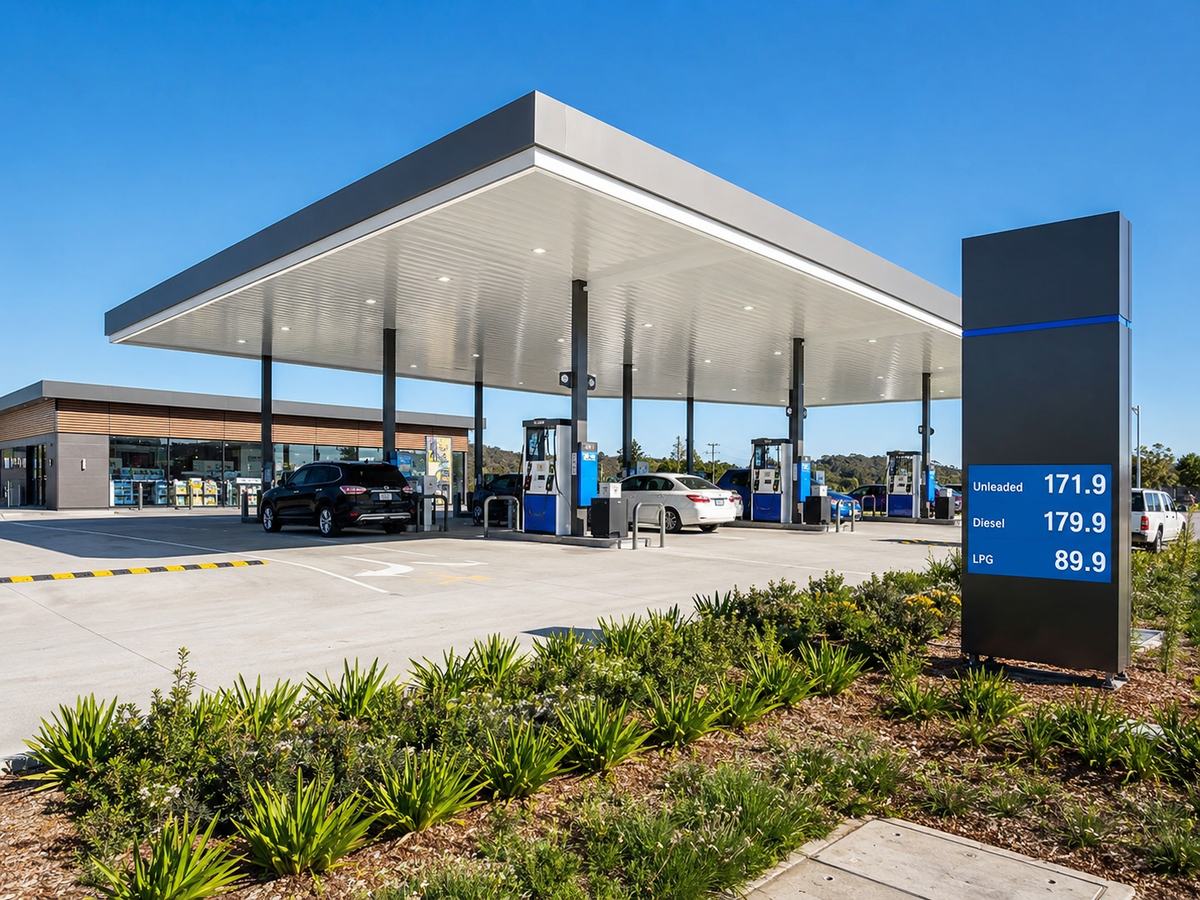
Service station development can be highly attractive, but it is not a standard commercial property project. A service station combines property development, specialist construction, environmental management, operational infrastructure, tenancy risk and long-term investment value. That combination can create strong opportunities for experienced developers, but it also means lenders assess these projects differently from conventional industrial, retail or residential developments.
A well-structured service station project may benefit from a long lease to a recognised operator, predictable rental income, strong exposure to passing traffic and the potential to include complementary uses such as fast food, car wash, convenience retail or electric-vehicle charging. These features can support a clear investment exit and make the completed property attractive to private investors, syndicates and institutional buyers.
However, the same project can become difficult to finance if the site has unresolved access issues, environmental risks, weak operator support, uncertain planning approvals, specialised construction costs or an optimistic valuation based on an aggressive capitalisation rate. The lender will therefore look beyond the land and building. It will assess the entire operating and investment proposition.
This guide explains how service station development finance works in Australia, what lenders examine, how debt is structured, why environmental due diligence matters, how leases and operator covenants affect value and how developers can improve their chances of securing funding.
What is service station development finance?
Service station development finance is a form of commercial construction funding used to acquire, develop, refurbish or reposition a site for fuel retailing and associated uses.
The facility may fund land acquisition, planning and design costs, civil works, building construction, underground fuel infrastructure, forecourt works, canopy construction, convenience retail space, landscaping, access works, professional fees and capitalised interest. Depending on the lender and project structure, some specialist equipment or operator-specific fitout may be funded separately.
The finance can be structured as a traditional senior development facility, a higher-leverage private credit facility, stretch senior debt, senior plus mezzanine finance or a combination of debt and external equity. The appropriate structure depends on the site, operator, lease, planning status, construction contract, developer experience and intended exit.
A build-to-sell project may be funded on the basis that the completed property will be sold to an investor. A build-to-hold project may rely on refinance into a long-term investment loan once construction is complete and the tenant is trading. A developer may also build under a pre-agreed sale or fund-through arrangement, where an investor commits to acquire the completed asset subject to conditions.
Although the facility is described as development finance, the lender’s assessment often resembles both construction finance and investment property lending. The project must be able to reach completion, but the completed property must also have a sustainable value and credible exit.
“A service station is funded on its lease, not its bowsers.”
— The Australian Property Development Handbook
Why service station projects appeal to developers and investors
Service stations can be attractive because they often combine essential-use characteristics with long-term lease structures. Fuel and convenience retail can generate consistent customer traffic, and well-located sites can remain strategically important even as transport technology evolves.
A long lease to a recognised fuel retailer or experienced operator may provide stable income, fixed or indexed rental growth and a clear basis for valuation. Investors may also be attracted to the relatively small management burden compared with multi-tenant retail property, particularly where the tenant is responsible for most operating obligations.
The development can sometimes include additional income streams. A fast-food tenancy, drive-through outlet, car wash, convenience store, truck parking or electric-vehicle charging facility may diversify income and improve the overall value of the site. These complementary uses can also increase dwell time and broaden the customer base.
The land itself may have strategic value because service stations require suitable zoning, safe access, visibility and sufficient area for vehicle circulation. Sites meeting all of these requirements can be difficult to replace.
These attractions do not remove risk. Service station values can be sensitive to the tenant, lease term, environmental condition and long-term suitability of the location. A strong project therefore needs more than a recognisable brand. It needs an appropriate site, enforceable agreements, realistic construction costs and a credible exit strategy.
The different service station development models
There is no single service station development model. The funding structure changes depending on who controls the site, who operates the business and who will ultimately own the completed property.
In a developer-led build-to-sell model, the developer acquires the site, secures approvals, enters into an agreement for lease with an operator, completes construction and sells the leased investment. The lender is primarily concerned with delivery risk and the ability to repay from the completed sale.
In a build-to-hold model, the developer retains the completed property and refinances the construction debt into an investment facility. The lender must be satisfied that the completed rent and valuation will support the refinance. Debt service coverage and exit loan-to-value become particularly important.
In an operator-led model, the fuel retailer or business operator may control the site or engage a developer to deliver the project. The operator may contribute equipment, fitout or specialist infrastructure. The lender needs clarity on which party is responsible for each cost and what security exists over the property and improvements.
A landowner joint venture may involve the landowner contributing the site while a development partner contributes cash, expertise and guarantees. This can reduce the developer’s upfront land cost, but the joint-venture agreement must clearly address control, cost overruns, distributions and lender security.
A fund-through structure may involve an investor progressively funding the development under a development management agreement. This can reduce conventional development debt, but it usually requires detailed documentation, strong counterparty support and strict delivery obligations.
How lenders assess the site
The site is the foundation of the credit assessment. A lender will examine whether the land is physically, legally and commercially suitable for a service station.
Location is critical. The lender will consider traffic volumes, road hierarchy, visibility, access, nearby intersections, vehicle entry and exit, competing service stations, surrounding development, catchment growth and the direction of traffic flow. A site with strong traffic exposure may still be unsuitable if access is difficult or restricted.
The size and shape of the land must accommodate fuel bowsers, underground storage tanks, tanker access, canopy structures, convenience retail, parking, truck movements where relevant, landscaping and any complementary tenancies. Awkward geometry can reduce efficiency and increase civil construction costs.
The title and easements must also be reviewed. Existing rights of way, drainage easements, service corridors or access restrictions can affect layout and value. Road authority requirements can create significant off-site works that are easy to underestimate during early feasibility.
The lender will also consider alternative use value. If the service station cannot proceed or the operator withdraws, the lender wants to understand what the land is worth for another permitted use. A site with broad commercial or industrial potential may provide greater downside protection than a highly specialised site with limited alternative demand.
Planning, access and approval risk
Planning approval is one of the most important milestones in a service station project. The lender will want to understand not only whether the use is permitted but also whether the approved design can be built within the project budget.
Service stations can attract detailed conditions relating to traffic, stormwater, noise, lighting, landscaping, signage, hours of operation, dangerous goods, waste management and environmental protection. Conditions imposed by the road authority or council may require turning lanes, intersection upgrades, median changes or road widening.
Access approval can be particularly important. A development may have planning approval but still face unresolved technical requirements for entry and exit. If these works are delayed or cost more than expected, the entire project can be affected.
Where complementary uses are included, such as a drive-through restaurant or car wash, separate planning conditions may apply. The developer needs to show that all components are coordinated and that one tenancy is not dependent on an approval that remains uncertain.
Lenders are generally more comfortable once development approval and major operational works approvals are in place. Funding land at an earlier stage is possible, but it is usually treated as a higher-risk land or pre-development facility with lower leverage and stronger sponsor support.
Talk to BluCow about your project →
Environmental due diligence
Environmental risk is one of the defining features of service station finance. Fuel storage and dispensing create the possibility of soil or groundwater contamination, vapour migration, leaks and future remediation liability.
For a greenfield site, the developer must still demonstrate that the design, tank system, drainage and operating procedures meet applicable standards. For an existing or former service station site, the lender will usually require detailed environmental investigations.
A preliminary site investigation may identify historical uses, potential contamination sources and areas requiring further testing. If risk is identified, a detailed site investigation may involve soil, groundwater or vapour sampling. The lender may also require a remediation action plan, environmental management plan or sign-off from an appropriately qualified consultant.
Environmental due diligence is not simply a planning requirement. It affects value, insurability, construction timing and the lender’s ability to enforce its security. Contamination can make a property difficult to sell and can create liabilities that survive a change in ownership.
The facility documents may require compliance with environmental laws, ongoing monitoring, immediate notification of incidents and specific insurance. The lender may also exclude known remediation costs from the facility unless they are fully quantified and independently reviewed.
Developers should address environmental risk early. Discovering contamination after finance approval can change the valuation, increase the equity requirement and delay settlement or construction.
The importance of the operator and tenant covenant
The completed value of a service station is often closely connected to the quality of the operator and the terms of the lease.
A long lease to a recognised national operator may provide strong investment appeal. The lender and valuer will assess the tenant’s financial strength, trading experience, parent-company support, lease term, options, rent reviews, security deposit, bank guarantee and responsibility for operating expenses.
A well-known brand does not always mean the lease is backed by the parent company. The tenant may be a franchisee, related entity or special-purpose vehicle. The lender will therefore examine the legal entity named on the lease and the actual strength of any guarantee.
The lease must also allocate responsibility for specialist infrastructure. The developer and operator should clearly agree who owns, maintains and replaces tanks, pumps, signage, point-of-sale systems, canopies and other equipment. Unclear obligations can create future disputes and affect investment value.
The valuer will consider whether the rent is sustainable. A high initial rent can increase the apparent value, but if it is above market or unsupported by the operator’s trading capacity, the lender may adopt a lower value or capitalise the income at a softer yield.
Where the project is developed without a committed operator, the lender faces greater leasing and valuation uncertainty. This usually results in lower leverage, more equity or a requirement to secure an acceptable operator before full construction funding.
Agreement for lease and lease conditions
The agreement for lease is often a key document in the funding application because it sets out the conditions that must be satisfied before the lease begins.
The lender will review the required completion standard, construction obligations, approval conditions, longstop dates, tenant termination rights, rent commencement, fitout contributions and any incentives. If the tenant can terminate easily because of minor delays or conditions outside the developer’s control, the lender may not treat the agreement as a secure exit.
The practical completion process should be clear. The agreement should identify who certifies completion, how defects are handled and whether the tenant must commence paying rent while minor defects remain.
The lender will also examine whether the lease is conditional on business approvals, fuel supply agreements, signage approvals or other matters that may not be controlled by the developer. Each unresolved condition increases execution risk.
An experienced property lawyer should ensure the agreement for lease, building contract and finance facility are aligned. The developer should not be required to deliver something under the tenant agreement that is excluded from the construction contract or funding budget.
Construction and specialist infrastructure
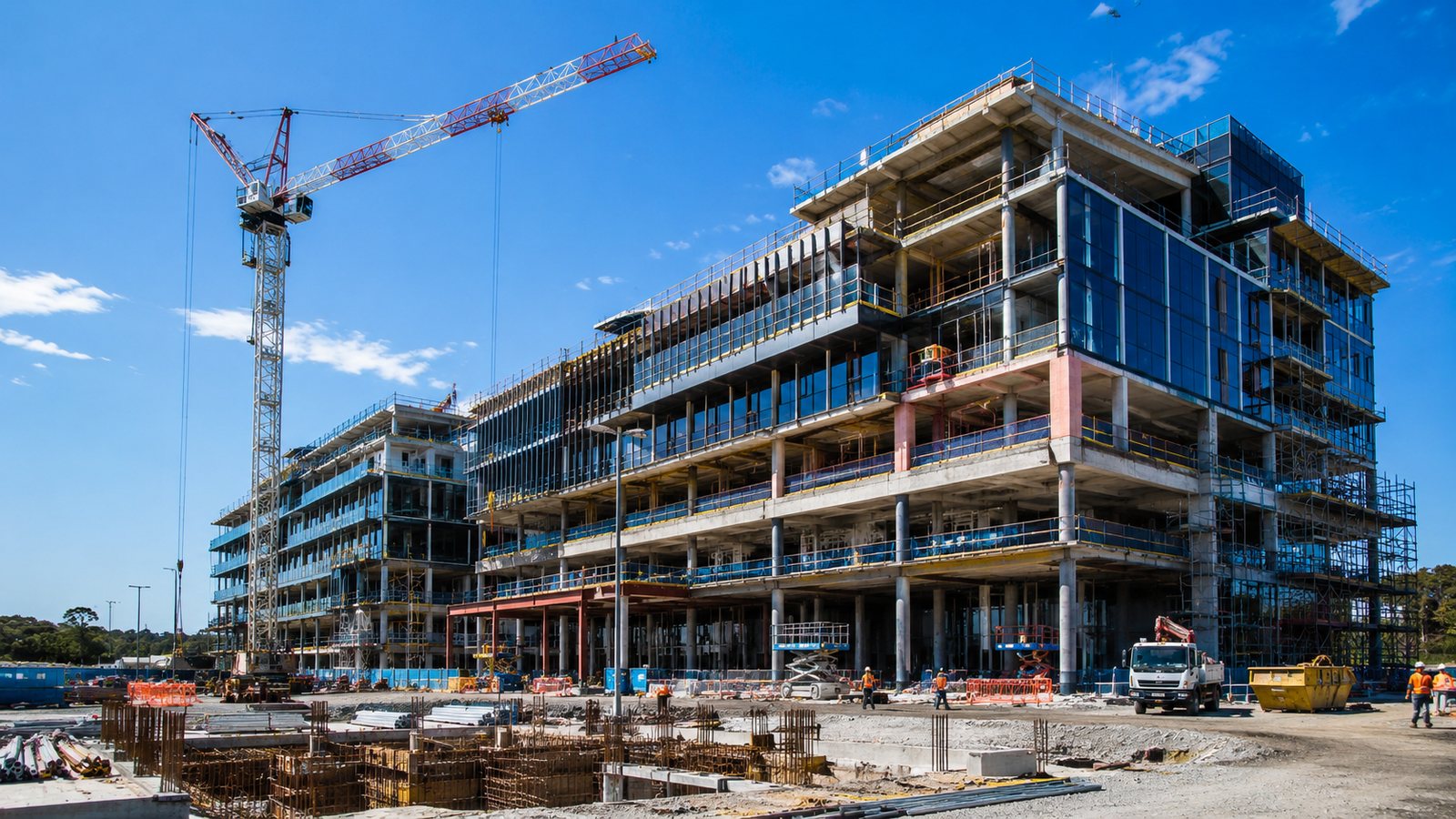
Service station construction includes conventional building works and highly specialised infrastructure.
The project may require underground fuel storage tanks, fuel lines, leak-detection systems, forecourt drainage, vapour recovery, separators, hazardous-area electrical works, canopies, signage pylons, heavy-duty pavements and tanker access. These components must be coordinated with the convenience building, services and external works.
The lender will rely heavily on the quantity surveyor or cost consultant to review the construction budget. Specialist packages should be supported by detailed quotes rather than broad allowances. The contingency must reflect the project’s complexity and stage of design.
The choice of builder is important. A general commercial builder may be capable of delivering the building, but the lender will want evidence that specialist subcontractors have appropriate experience. The construction contract should clearly allocate responsibility for coordination and commissioning.
Fixed-price contracts can reduce risk, but lenders will still review exclusions, provisional sums, escalation clauses, latent-condition provisions and variations. A contract described as fixed price may still contain significant cost exposure.
Commissioning is also critical. The operator may not accept the site until tanks, pumps, safety systems, point-of-sale systems and other equipment have been tested and approved. The funding program should allow time for this process before rent commencement or sale settlement.
“The operator covenant is the collateral.”
— The Australian Property Development Handbook
What costs can be included in the facility?
A service station development facility may include land, construction and professional costs, but lenders differ in how they treat specialist equipment and business-related expenditure.
Property costs such as civil works, buildings, canopies, forecourt pavements, drainage, landscaping and authority charges are more likely to be included. Underground tanks and fixed fuel infrastructure may also be treated as part of the real property, depending on ownership and valuation treatment.
Movable equipment, stock, business acquisition costs, working capital and operator-specific fitout may be excluded or funded under a separate facility. The developer needs to identify these costs early because they can create a material cash requirement outside the development loan.
Finance costs also require careful treatment. Establishment fees, legal costs, valuation fees, quantity-surveyor fees, interest and line fees may be capitalised, but they still count toward total development cost and facility limits.
GST timing can affect cash flow. Even if GST is recoverable, the developer may need a separate GST facility or sufficient equity to cover the timing difference.
A complete funding plan should show every cost, identify who is responsible and confirm which facility will fund it. The senior lender will not accept an unexplained gap simply because a cost is described as operator equipment.
Key lender metrics
Service station developments are assessed using many of the same metrics as other commercial projects, but the interpretation is shaped by the operator and lease.
Loan-to-cost measures debt as a percentage of total development cost. It indicates how much of the project is being funded by the lender and how much equity sits beneath the debt.
Loan-to-value measures debt against the lender’s adopted value. For a build-to-sell project, this may be the completed leased investment value. For a build-to-hold project, the lender will also consider the likely refinance value.
Profit on cost compares projected development profit with total development cost. A strong margin provides protection against cost increases, delays and softer valuation yields.
Debt service coverage may become relevant where the exit is refinance. The completed rent must support the proposed investment debt after allowing for operating costs and lender assessment rates.
Debt yield compares net operating income with the loan amount. It provides another measure of income support without relying solely on the capitalisation rate.
Cost to complete is monitored throughout construction. The lender must be satisfied that the undrawn facility and remaining equity are sufficient to finish all works and satisfy tenant conditions.
Valuation of a completed service station
The valuation is central to the finance structure because it can determine both the maximum debt and the developer’s equity requirement.
A completed service station is commonly valued as an income-producing investment. The valuer considers the rent, lease term, tenant covenant, rent review structure, property condition, location, site size, alternative use, passing income and market evidence.
The capitalisation rate applied to the income has a major effect on value. A small movement in yield can materially change the valuation. Developers should therefore avoid relying on the most aggressive market transactions when preparing the feasibility.
The valuer may also consider whether the rent reflects property income or includes business value. If the rent appears unsustainable or linked to exceptional trading assumptions, the adopted value may be reduced.
Where the site includes multiple tenancies, each income stream may be valued differently. A national fast-food tenant may attract a different yield from an independent car-wash operator or convenience retailer.
The valuation may also include an “as is” land value and a value on completion. The lender can use both, particularly if land funding is required before construction commences.
Running your own numbers?
Open the feasibility calculators →Presales, precommitments and fund-through exits
A developer may reduce exit risk by securing a purchaser before construction begins.
A pre-agreed sale can provide strong lender comfort if the purchaser is credible and the contract has limited conditions. The lender will review the purchase price, deposit, longstop date, completion conditions and purchaser termination rights.
A fund-through arrangement can provide progressive investor funding during construction. This may reduce the amount of development debt required, but it introduces counterparty risk and complex documentation. The senior lender must understand the priority of payments and the investor’s obligations.
An agreement for lease to a strong operator is also a form of precommitment. It does not guarantee a sale, but it can make the completed property more readily marketable.
Developers should distinguish between binding commitments and expressions of interest. A lender will not treat a non-binding letter or preliminary operator discussion as equivalent to an executed lease or sale contract.
Senior debt, stretch senior and mezzanine options
A conventional senior development facility is usually the lowest-cost debt option, but it requires a meaningful equity contribution. It may suit a developer with sufficient capital and a strong preference for lower finance cost.
Stretch senior funding provides a single higher-leverage facility. It can reduce the developer’s cash contribution and avoid the complexity of a separate mezzanine lender. The trade-off is higher pricing and less tolerance for underperformance.
A senior-plus-mezzanine structure combines lower-cost senior debt with subordinated debt. This can achieve similar leverage to stretch senior, but the intercreditor agreement adds complexity. The mezzanine lender may also require additional fees, minimum returns or profit participation.
Preferred equity or joint-venture equity may fill the capital gap without increasing fixed debt obligations. However, the developer may surrender part of the project profit and accept investor control rights.
The best structure depends on the project margin, sponsor liquidity, timing, experience and risk tolerance. A higher-leverage structure should only be used where the project has enough profit and contingency to absorb the additional finance cost.
Worked example: a leased service station development
Assume a developer acquires a prominent corner site and secures an agreement for lease with an established fuel operator. The project includes a convenience store, six fuel bowsers, a canopy, a separate fast-food tenancy and electric-vehicle charging bays.
The total development cost is $14 million, including land, construction, professional fees, authority works, finance costs and contingency. The completed annual net rent is projected at $1.25 million. Based on the lease terms, tenant covenant and market evidence, the valuer adopts a completed value of $18.5 million.
Under a conventional senior structure, the lender offers $9.8 million. The developer must contribute $4.2 million. The lower leverage creates a strong buffer and keeps finance cost relatively moderate.
Under a stretch senior structure, the lender offers $11.2 million. The developer contributes $2.8 million, preserving $1.4 million of cash. The higher facility carries additional interest and fees, but the developer retains full ownership and may use the preserved capital on another project.
The choice depends on the developer’s broader capital strategy. If the project has a comfortable profit margin, the lease is secure and the sponsor has experience delivering similar assets, the stretch option may be reasonable. If the project has tight contingency or uncertain roadworks, the conventional structure may be safer.
The lender will also test the refinance or sale exit. If the completed value falls because the capitalisation rate softens, the refinance amount may be lower than expected. The developer therefore needs a backup plan, such as additional equity, partial debt reduction or a sale strategy.
Common reasons service station finance applications are declined
A service station application can be declined even where the projected return appears strong.
One common reason is unresolved environmental risk. If contamination is suspected but not quantified, the lender cannot assess the downside exposure.
Another is weak access. A prominent site can still fail if vehicles cannot enter and exit safely or if road authority approval remains uncertain.
The absence of a credible operator can also be fatal. A speculative project without a tenant may not support the projected investment value.
Applications are also declined because of inadequate construction detail. Broad allowances for tanks, forecourt works or authority upgrades create uncertainty around total cost.
A weak lease can undermine the valuation. Short terms, easy termination rights, unsupported rent or a poorly capitalised tenant may lead the valuer or lender to adopt a lower value.
Finally, inexperienced sponsors may struggle to obtain high leverage for a specialist asset. The lender may require a stronger project manager, experienced builder, lower debt or additional equity.
“Value the income first, then fund the build.”
— The Australian Property Development Handbook
How developers can improve financeability
The strongest service station funding applications remove uncertainty before approaching lenders.
The developer should secure clear planning and access approvals, complete appropriate environmental investigations and obtain detailed specialist construction pricing. The operator agreement should be legally reviewed and the tenant entity, guarantees and lease conditions clearly identified.
The feasibility should use realistic rents, yields and timing. It should include all roadworks, authority charges, environmental costs, tenant incentives, commissioning expenses and finance costs.
The delivery team should demonstrate relevant experience. Where the developer has not completed a service station before, an experienced builder, project manager, environmental consultant and leasing adviser can strengthen the application.
The exit strategy should be supported by evidence. A proposed sale should be based on comparable investment transactions and credible buyer demand. A refinance should be tested using conservative debt service assumptions.
The developer should also maintain a liquidity reserve. Specialist projects can encounter variations and delays that are difficult to predict. A sponsor with accessible capital is more likely to retain lender confidence if the project changes.
Documents lenders typically require
A complete service station finance submission usually includes the development approval, approved plans, site survey, title search, access approvals, environmental reports, detailed feasibility, construction program, building contract, quantity-surveyor report and evidence of the developer’s equity.
The lender will also require the agreement for lease, proposed lease, operator information, guarantees, fuel supply arrangements where relevant and details of any complementary tenancies.
A valuation will generally be commissioned by the lender. The developer should provide the valuer with accurate lease documents, plans, cost information and market evidence.
Corporate financial statements, tax returns, asset and liability statements, project experience and details of previous developments are also commonly required.
If the project involves external equity, mezzanine debt or a landowner joint venture, the relevant agreements and capital commitments must be disclosed.
Questions to ask before accepting a term sheet
The developer should understand exactly how the lender calculates total development cost, value and equity. The term sheet should state which specialist equipment and fitout costs are included.
The developer should confirm whether equity must be contributed first, whether land value uplift is recognised and how cost overruns will be handled.
The conditions relating to the operator should be reviewed carefully. The lender may require an executed lease, tenant bank guarantee, parent guarantee or satisfaction of all conditions precedent before first drawdown.
Environmental covenants, insurance requirements and valuation re-test rights should also be understood.
Pricing should be assessed in total dollars, not only as an annual rate. Establishment fees, line fees, valuation costs, legal fees, minimum interest, exit fees and extension pricing can materially affect the project return.
The developer should also ask how the lender will treat a delayed rent commencement, operator withdrawal, cost increase or softer completion valuation. The answers reveal how flexible the facility will be if the project departs from the original plan.
These principles come from our free guide.
Download the handbook →The future of service station development
Service station development is evolving as vehicle technology, retail behaviour and energy infrastructure change.
Traditional fuel demand remains important, but new projects increasingly consider electric-vehicle charging, alternative fuels, food and beverage, parcel collection, car care and broader convenience retail. The service station may become a roadside mobility and convenience hub rather than a single-purpose fuel outlet.
For lenders, this creates both opportunity and uncertainty. A project with diversified, sustainable income may be more resilient, but emerging technology requires realistic assumptions about utilisation, power supply and capital cost.
The long-term value of the site will continue to depend on location, access and adaptability. A well-designed property that can evolve with transport and consumer demand may remain attractive even if the mix of fuel and charging changes over time.
Developers should therefore avoid designing only for the current operator. Flexible layouts, adequate power infrastructure and alternative-use potential can improve long-term value and lender confidence.
Frequently asked questions
Can a first-time developer obtain service station development finance? Yes, but the lender is likely to require a strong operator, experienced consultants, an appropriate builder, more equity and a conservative structure.
Does the lender fund the fuel tanks and pumps? Sometimes. Treatment varies depending on ownership, whether the equipment is fixed to the land and how the valuer treats it. Some items may require separate equipment finance or operator funding.
Is a national fuel brand enough to secure finance? No. The lender will review the legal tenant entity, guarantees, lease terms, rent and project fundamentals. Brand recognition alone is not sufficient.
Can an existing contaminated site be financed? Potentially, but the contamination must be investigated, quantified and managed. The lender may require remediation before settlement or include strict conditions.
Do service station developments require presales? Not in the same way as residential developments. An executed lease, pre-agreed sale or fund-through arrangement may provide equivalent exit support.
Can the project be refinanced after completion? Yes, provided the completed value, lease income, tenant covenant and debt service coverage support the proposed investment loan.
Why do lenders require more contingency for service stations? Specialist infrastructure, environmental requirements, authority works and commissioning can create costs that are harder to predict than standard building works.
Conclusion
Service station development finance is specialist commercial funding. The lender must be satisfied that the site is suitable, approvals are secure, environmental risks are understood, construction costs are complete, the operator is credible and the exit is realistic.
The strongest projects combine a strategically located site, long-term operator commitment, experienced delivery team, detailed specialist pricing and a conservative valuation. They also maintain enough equity and liquidity to manage the unexpected.
Developers should not approach service station finance as a simple land-and-building transaction. The property, operator, environmental obligations and investment exit are interconnected. A weakness in one area can affect the entire funding structure.
Disclaimer
This article provides general information only and does not constitute financial, legal, tax, environmental, planning, investment or credit advice. Service station development finance terms vary between lenders and projects. Developers should obtain advice from appropriately qualified professionals before entering into any transaction.