



Introduction
Loan-to-Cost and Loan-to-Value Ratio are two of the most important measures in property development finance. They are also two of the most commonly misunderstood.
Developers often focus on whichever ratio appears to support the larger loan. A project may look comfortable at 70 per cent of total development cost, yet the lender may reduce the facility because the independent valuation produces a tighter loan-to-value result. The opposite can also occur: the project may have a strong value position, but the lender may still limit debt because the requested facility represents too much of the total cost.
The key point is that lenders rarely rely on only one ratio. They use LTC and LVR together, along with profit margin, cost to complete, presales, sponsor equity, experience and the exit strategy. The final loan is generally constrained by whichever test produces the lower acceptable amount.
Understanding the difference between LTC and LVR helps developers estimate the true equity requirement, compare term sheets properly and identify where a funding shortfall may arise before the lender’s valuation or quantity surveyor review is complete.
This guide explains how both ratios are calculated, why lenders use them, how they affect equity and how they behave when costs or values change during a development.
What is Loan-to-Cost?
Loan-to-Cost, commonly abbreviated to LTC, compares the amount of debt with the total cost of completing the development.
The basic calculation is the loan amount divided by total development cost, expressed as a percentage.
If a project has a total development cost of $20 million and the lender provides a $14 million facility, the LTC is 70 per cent.
The remaining 30 per cent must generally be funded through developer equity, land equity, external investors, mezzanine debt or another subordinated source acceptable to the senior lender.
LTC focuses on how the project is funded. It tells the lender how much of the development cost is being contributed by debt and how much capital sits beneath the lender.
A lower LTC usually means the lender has a larger equity buffer. A higher LTC improves the developer’s capital efficiency but leaves less room to absorb cost increases, delays or lower values.
The calculation appears simple, but the result depends heavily on what the lender includes in total development cost.
What is included in Total Development Cost?
Total development cost is broader than the building contract.
It commonly includes land acquisition, stamp duty, legal fees, demolition, consultant costs, planning fees, authority charges, civil works, construction, marketing, sales commissions, finance costs, contingency and GST timing where relevant.
Different lenders may treat some costs differently. Capitalised interest and lender fees may be included in the project budget, but certain lenders may exclude them when calculating eligible cost for leverage purposes.
Developer fees, profit margins, related-party charges and land value uplift may also receive different treatment.
A developer might calculate total development cost at $22 million while the lender adopts an eligible cost base of $21 million. If the proposed loan is $15 million, the developer’s LTC is 68.2 per cent on the first figure but 71.4 per cent on the lender’s figure.
This difference can materially affect the maximum debt amount.
Before comparing term sheets, the developer should confirm the lender’s precise definition of total development cost and ensure the feasibility uses the same basis.
“LVR and LTC are two questions, not one.”
— The Australian Property Development Handbook
What is Loan-to-Value Ratio?
Loan-to-Value Ratio, commonly abbreviated to LVR, compares the debt with the lender’s adopted property value.
For a development project, the relevant value may be the current land value, the gross realisation value of the completed stock or the on-completion value of an income-producing asset.
If a lender provides a $14 million facility against an adopted completed value of $22 million, the LVR is approximately 63.6 per cent.
LVR focuses on security coverage. It tells the lender how much debt sits against the property value and how much value would need to fall before the lender’s principal is exposed.
The lender generally relies on an independent valuation prepared by an approved valuer. The developer’s feasibility, purchase price or preferred market estimate does not determine the final LVR.
A lower valuation can reduce the available debt even when total development cost remains unchanged.
Gross Realisation Value and on-completion value
For residential sell-down developments, lenders often refer to Gross Realisation Value, or GRV. This is the estimated total selling value of all completed dwellings or lots before selling costs and other deductions.
For commercial and specialist projects, the relevant figure may be the on-completion investment value. This is commonly based on completed rent, lease terms, tenant covenant and an adopted capitalisation rate.
These values are not interchangeable. A townhouse project may be assessed against the total value of individual sales, while a childcare centre or service station may be assessed as one leased investment.
The valuer may also provide an “as is” value, reflecting the site in its current condition. This can be important for land acquisition or early-stage facilities.
The lender may apply different LVR limits to the as-is value and the completed value. A project can therefore satisfy the completed-value test but still require more equity at settlement because the current land value supports less debt.
Why lenders use both LTC and LVR
LTC and LVR measure different risks.
LTC measures how much of the project cost is funded by debt. It protects the lender from excessive leverage relative to the amount actually invested in the development.
LVR measures debt against value. It protects the lender from a fall in the market value of its security.
Using only LTC could produce an unsafe result if the project cost is high but the completed value is weak. Using only LVR could allow a lender to fund almost the entire project cost where the land has appreciated substantially, leaving the developer with little genuine cash at risk.
By applying both tests, the lender can require an appropriate sponsor contribution while maintaining sufficient security coverage.
The final approved facility is usually the lower amount supported by the lender’s LTC limit, LVR limit and other credit conditions.
Worked example: when LTC is the binding constraint
Assume a townhouse development has a total development cost of $20 million and a lender-adopted gross realisation value of $30 million.
The lender is prepared to provide up to 70 per cent of total development cost and up to 65 per cent of completed value.
The LTC limit supports debt of $14 million.
The LVR limit supports debt of $19.5 million.
Although the completed value provides substantial security, the lender does not provide $19.5 million because that amount would fund almost the entire project cost.
The facility is therefore constrained to $14 million by LTC.
The developer must contribute at least $6 million, plus any costs excluded from the lender’s eligible cost calculation.
This example shows that strong valuation headroom does not automatically remove the need for meaningful developer equity.
Talk to BluCow about your project →
Worked example: when LVR is the binding constraint
Assume another project has a total development cost of $20 million but an adopted completed value of only $22 million.
The lender’s 70 per cent LTC limit again supports debt of $14 million.
However, the 60 per cent LVR limit supports only $13.2 million.
The facility is therefore constrained by LVR, not LTC.
The developer must contribute $6.8 million rather than $6 million.
The difference may appear modest, but the funding gap can increase further if the lender excludes costs or requires an additional contingency.
This example demonstrates why a lower valuation can increase equity even though the construction budget has not changed.

How LTC affects developer equity
LTC has a direct relationship with the developer’s base equity contribution.
If the lender funds 65 per cent of eligible development cost, the remaining 35 per cent must be funded from other sources.
However, the developer’s actual cash requirement may be greater than the simple percentage suggests.
The lender may not recognise all pre-development expenditure, land uplift or related-party costs. It may also require the developer to fund certain items outside the facility.
Equity timing is also important. If the lender requires equity first, the developer may need to contribute the entire required amount before construction debt is drawn.
A term sheet showing 70 per cent LTC does not therefore mean the developer only needs 30 per cent cash at all times. The peak cash requirement must be calculated through the monthly project cash flow.
How LVR affects developer equity
LVR can create an additional equity requirement when the independent valuation is lower than the feasibility.
Suppose the developer expects completed value of $32 million and requests a $19 million facility at 59.4 per cent LVR.
If the lender’s valuer adopts $29 million and the maximum LVR is 60 per cent, the loan is capped at $17.4 million.
The developer must find an additional $1.6 million of equity or reduce project cost.
This is why developers should not commit all available capital based on an internal valuation assumption.
A prudent capital plan allows for some valuation movement, particularly where comparable evidence is limited or the market is changing.
How cost increases change LTC
When total development cost rises and the loan remains unchanged, the mathematical LTC decreases.
For example, a $14 million facility against a $20 million cost has an LTC of 70 per cent. If cost increases to $21 million, the same loan represents 66.7 per cent LTC.
This lower percentage does not mean the project has become easier to fund. The developer must contribute the entire $1 million increase unless the lender agrees to provide more debt.
If the lender increases the facility to maintain 70 per cent LTC, debt would rise to $14.7 million. The lender must still confirm that the higher amount fits within LVR, profit and cost-to-complete requirements.
The maximum LTC is a credit limit, not an automatic commitment to fund future overruns.
How valuation changes affect LVR
When value falls and debt remains unchanged, LVR increases.
A $15 million loan against a $25 million value has a 60 per cent LVR.
If the valuation falls to $22.5 million, the LVR increases to 66.7 per cent.
The lender may require a debt reduction, additional equity or revised exit strategy if the new ratio breaches the facility covenant.
Value can change because of lower sale prices, softer capitalisation rates, weaker lease terms, delays or a revised valuer opinion.
Developers should monitor valuation sensitivity throughout the project rather than treating the original valuation as fixed.
“Lenders size debt to the lower of the two — always.”
— The Australian Property Development Handbook
The relationship between LTC, LVR and profit margin
LTC and LVR do not measure profitability.
A project can have conservative leverage but still produce an inadequate margin. It can also have a strong profit margin but require more equity because the lender applies a lower leverage limit.
Lenders therefore assess development profit separately.
A healthy margin protects against lower values, higher costs and delays. If the margin is thin, the lender may reduce both LTC and LVR limits despite the ratios appearing acceptable under standard policy.
Higher-leverage private credit can increase finance cost and reduce the remaining margin. The developer should model leverage and profitability together.
The best funding structure is not necessarily the one with the highest available LTC. It is the structure that leaves the project with sufficient profit and liquidity after all finance costs.
How land equity is treated
Land equity can make the relationship between LTC and LVR more complex.
Assume a developer purchased land for $4 million several years ago and the current valuation is $7 million.
The lender may recognise the current land value when calculating the project’s value position. This can improve LVR.
However, the lender may use the lower historical cost or another eligible amount when calculating LTC.
The project can therefore show substantial value equity while still requiring additional cash to satisfy the cost contribution.
Existing debt over the land must also be deducted. A site valued at $7 million with a $4 million mortgage provides only $3 million of net land equity.
Developers should ask how the lender treats land uplift before assuming it will satisfy the entire equity requirement.
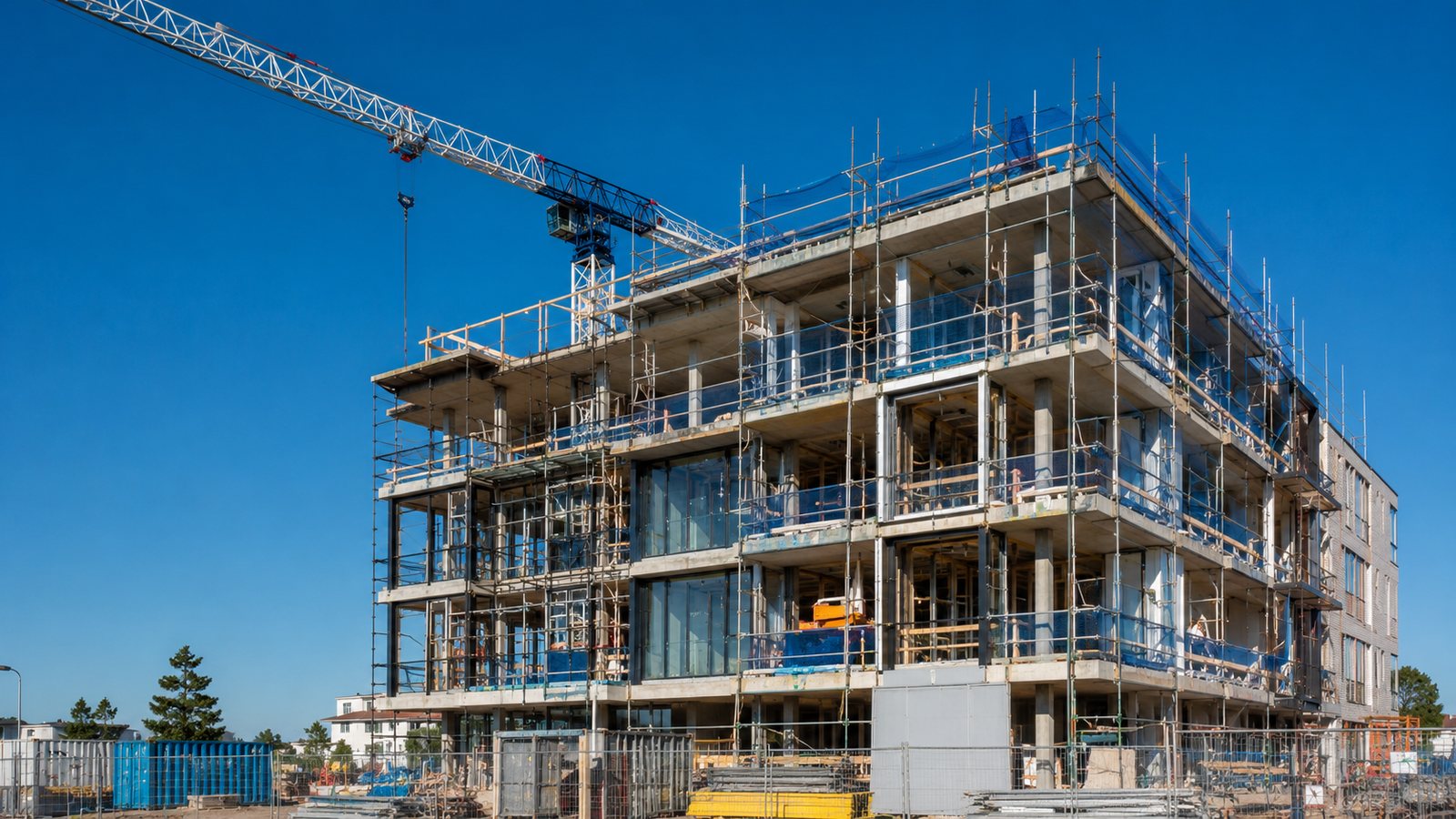
LTC and LVR in land subdivision finance
Subdivision finance often uses LTC and LVR alongside staged release-price calculations.
The total development cost includes land, civil works, consultants, authority charges, finance costs and contingency.
The value may be based on the gross realisation value of the completed lots.
A lender may cap the facility by both LTC and a percentage of GRV. It will also determine how much each lot settlement must contribute to debt reduction.
A subdivision with a high GRV may still require substantial equity if civil costs are uncertain or the lender adopts a conservative LTC.
Staging can reduce peak debt and improve the capital structure, but later stages may depend on settlement proceeds from earlier lots.
Developers should model LTC, LVR and release prices together rather than viewing each ratio in isolation.
LTC and LVR in apartment and townhouse developments
For apartment and townhouse projects, LTC is closely linked to the sponsor’s equity and LVR is linked to completed sale value.
Presales can affect the lender’s comfort but do not usually change the basic calculation directly. They support the valuation and debt-repayment strategy.
Large apartment developments may face more conservative ratios because of long construction periods, settlement concentration and market risk.
Smaller townhouse projects may attract more flexible treatment where the product is conventional and the sponsor is experienced.
The lender may also apply a net realisation test after selling costs rather than relying only on gross value.
A project that appears comfortable on gross LVR may provide less debt coverage once GST, commissions and other selling costs are considered.
Running your own numbers?
Open the feasibility calculators →LTC and LVR in commercial developments
Commercial development finance commonly uses LTC and completed-value LVR, but income metrics also become important.
A leased industrial, retail, childcare or service station project may be valued by capitalising net rent.
The lender will assess whether the completed income supports refinance debt through Debt Service Coverage Ratio and debt yield.
A project can satisfy LTC and LVR yet fail the refinance test if the rent is too low to service the proposed exit loan.
Capitalisation-rate sensitivity is also important. If market yields soften, the completed value can fall without any change in construction cost.
Commercial developers should therefore test LTC, LVR, debt service coverage and exit value together.
As-is LVR versus on-completion LVR
Some facilities apply different LVR tests at different stages.
At land settlement, the lender may limit debt against the current as-is value.
During construction, the lender may monitor debt against progressive value or rely mainly on cost to complete.
At completion, the lender assesses debt against GRV or investment value.
A project can have a strong on-completion value but insufficient current security to support the land acquisition amount.
This can create an early equity requirement that later appears conservative once approvals or construction are complete.
The developer should understand which valuation basis applies at each stage of the facility.
Why the advertised maximum ratio may not apply
Lenders often advertise maximum LTC or LVR levels, but these are not standard entitlements.
The maximum may only apply to experienced sponsors, preferred asset classes, strong locations, approved builders and projects with acceptable margins.
A first-time developer, speculative project or specialised asset may receive lower leverage.
The loan may also be constrained by minimum profit, presales, debt coverage, cost to complete, exposure limits or the lender’s total portfolio.
A quoted maximum of 75 per cent LTC does not mean every project will receive 75 per cent.
Indicative leverage should be treated as a starting point until the lender has reviewed the full application, valuation and QS report.
Comparing term sheets correctly
Two term sheets can quote the same LTC while providing different loan amounts.
One lender may include capitalised interest and fees within total development cost. Another may calculate leverage before finance costs.
One may recognise current land value. Another may use historical cost.
LVR may also be calculated against gross realisation value, net realisation value or completed investment value.
Developers should convert each term sheet into actual dollars using the lender’s definitions.
The comparison should show maximum debt, equity required, excluded costs, timing of contributions, total finance cost and downside sensitivity.
Ratios are useful, but the dollar cash flow determines whether the facility works.
“Know the metric before you negotiate the term.”
— The Australian Property Development Handbook
A combined worked example
Assume an industrial development has total development cost of $24 million and a completed value of $32 million.
Lender A offers up to 65 per cent LTC and 55 per cent LVR.
The LTC test supports $15.6 million.
The LVR test supports $17.6 million.
The facility is constrained to $15.6 million, requiring base equity of $8.4 million.
Lender B offers up to 72.5 per cent LTC and 50 per cent LVR.
The LTC test supports $17.4 million.
The LVR test supports only $16 million.
The facility is constrained to $16 million, requiring base equity of $8 million.
Although Lender B advertises a much higher LTC, the tighter LVR means it provides only $400,000 more debt.
If Lender B also charges materially higher fees, the apparent leverage advantage may not justify the additional cost.
This example shows why both ratios and total dollars must be compared.

Common mistakes developers make
One common mistake is calculating LTC using an incomplete cost budget.
Another is using the developer’s valuation rather than the lender’s adopted value.
Developers may also assume the higher of the LTC and LVR results determines the loan. In reality, the lower result generally controls.
A further mistake is treating maximum leverage as a commitment to fund cost overruns.
Some developers overlook costs excluded from the lender’s calculation, which increases the actual cash contribution.
Others compare term sheets by percentage without modelling equity timing and total cost.
These mistakes can be avoided by reconciling the lender’s definitions before accepting the facility.
How to improve the leverage position
A developer can improve the leverage outcome by reducing risk rather than simply requesting a higher ratio.
Securing development approval, resolving conditions and completing design can improve lender confidence.
A fixed-price contract with an experienced builder can reduce cost uncertainty.
Presales, preleases and strong market evidence can support valuation and the exit strategy.
Increasing project profit through a better acquisition price or controlled cost base can improve bankability.
An experienced sponsor and strong liquidity can also support more flexible terms.
Where senior leverage remains insufficient, stretch senior, mezzanine or equity may fill part of the gap.
The objective should be an appropriate capital structure, not the maximum debt available.
These principles come from our free guide.
Download the handbook →Questions to ask a lender
The developer should ask exactly which costs are included in the LTC calculation.
The valuation basis for LVR should be confirmed, including whether the lender uses gross or net realisation value.
The developer should understand how land uplift, finance costs, GST, developer fees and contingency are treated.
The term sheet should identify whether both ratios must be satisfied at all times or only at approval and completion.
The developer should also ask how cost increases, valuation changes and facility increases will be treated.
For commercial projects, refinance metrics such as DSCR and debt yield should be confirmed.
Clear definitions prevent surprises after valuation or QS review.
Frequently asked questions
Is LTC the same as LVR? No. LTC measures debt against development cost, while LVR measures debt against property value.
Which ratio is more important? Both are important. The lender generally applies the more restrictive outcome together with other credit requirements.
Can a project have a low LVR but still need substantial equity? Yes. A strong value position does not necessarily allow the lender to fund most of the project cost.
Does a cost increase breach LTC? It may reduce the mathematical LTC if debt stays unchanged, but it can create a funding shortfall that the developer must cover.
Can a higher valuation reduce the cash contribution? Potentially, if LVR is the binding constraint. It may not help where LTC already limits the facility.
Are finance costs included in LTC? Sometimes. Treatment varies between lenders and should be confirmed.
Does private credit use LTC and LVR? Yes. Private lenders may offer higher leverage, but they still assess cost, value, margin and exit.
Can land value uplift count as equity? It may be recognised, but treatment varies and existing land debt must be deducted.
Conclusion
Loan-to-Cost and Loan-to-Value Ratio answer different questions.
LTC measures how much of the development cost is funded by debt. LVR measures how much debt is supported by the property value.
Lenders use both because a project needs sufficient sponsor capital and sufficient security coverage.
The final loan is usually controlled by the lowest amount supported by LTC, LVR and the lender’s other credit tests.
Developers should focus on actual debt and equity dollars rather than headline percentages. The lender’s definitions, valuation basis, excluded costs and equity timing all affect the real funding requirement.
Disclaimer
This article provides general information only and does not constitute financial, legal, tax, investment, valuation or credit advice. LTC, LVR and development finance requirements vary between lenders and projects. Developers should obtain advice from appropriately qualified professionals before entering into any transaction.